20,000 hours on stage have taught me these 10 things
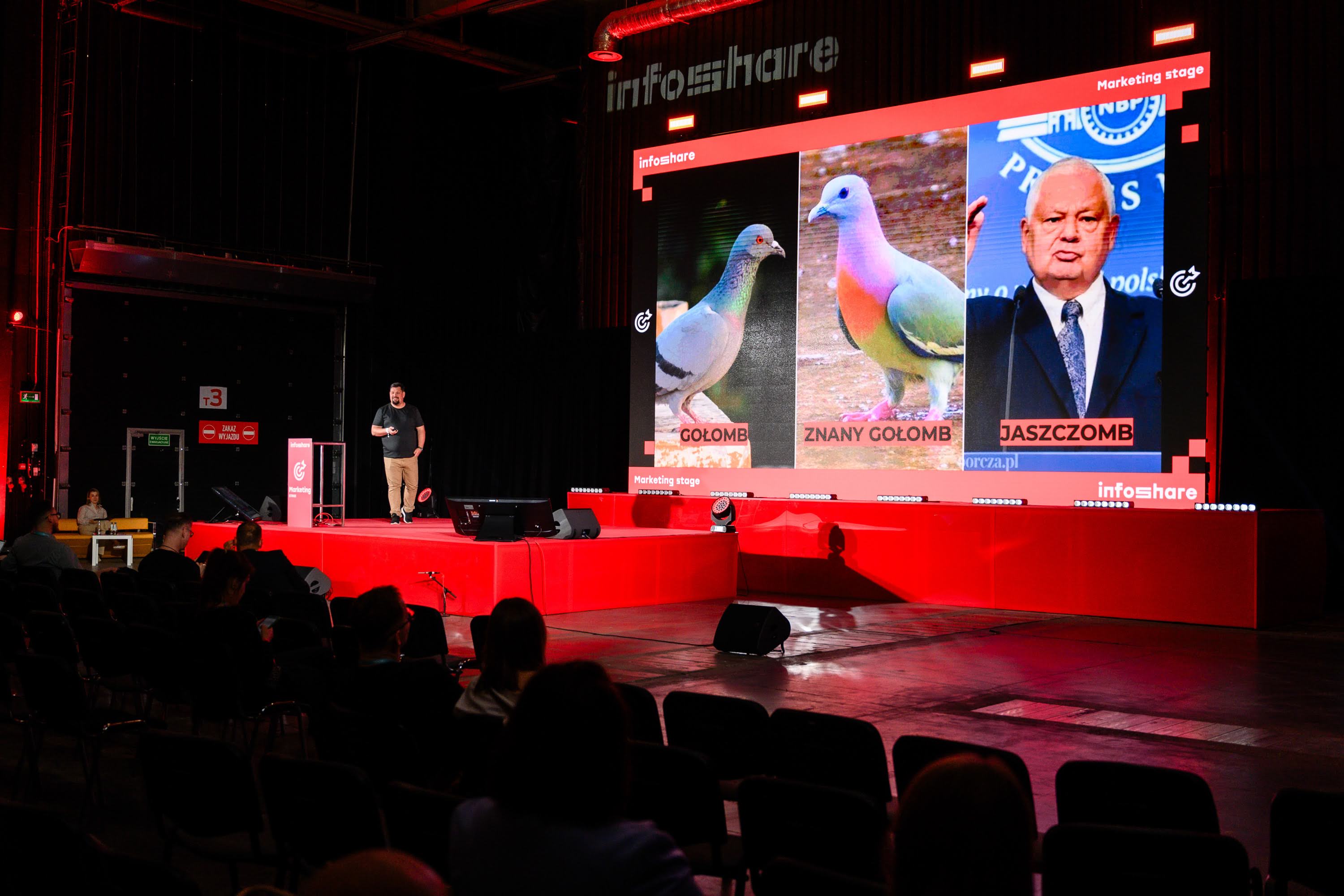
I have spent over 20,000 hours on stage as a speaker, coach, and teacher. From small, stuffy rooms to the main stages at TEDx, Infoshare czy I love Marketing. I have a few tips for you. Especially if you're just starting out as a performer or if you get really nervous before stepping onto a big stage.
Where do I even start? Preferably quickly and effectively.
But don't jump in at the deep end right away. It's best to hone your skills at small meetups. Social Media Czwartki or Crash Mondays. I started out there myself, attending small gatherings for people in the IT field.
These are great and safe places to test your skills. I look for these kinds of events on crossweb.pl, where, at my request, Krzysiek added a so-called feedback module—a tool that lets you receive anonymous feedback on your presentation. It’s a great solution because you know what to improve or what “worked” and what didn’t.
All right. What about the slides? What should my presentation be like? I’m no Kamil Kozieł, but I’ll share my thoughts.
- Remember! Only you know what you were supposed to say. You walk onto the stage, lose your train of thought, and break out in a cold sweat? Relax. The audience doesn’t have your script in their heads. If you skip a sentence, an anecdote, or a slide—no one will notice. Well, unless you start apologizing and panicking yourself. Don’t do that. It was meant to be that way, and that’s that.
- The first few seconds are your hook. A stiff opening like: “Good morning, my name is Kamil, I work in cybersecurity, and I’m going to talk about online threats...” Hit them with a headline: “In the next 15 minutes, I’ll show you how, with just 14.99 PLN and a free bot from the dark web, I took control of a company’s network that employs 100 people. And how you can check if your business is next.” Can you feel the difference? Create headlines that pack a punch. That’s a key skill for any speaker today.
- How you end is also important. It’s those last 30 seconds that people will remember most—they’ll quote them later on LinkedIn and repeat them to a colleague over Monday morning coffee. Never, ever end your presentation with a “Thank you for your attention” slide and a muttered, “Well, I guess that’s it from me, thanks.” Have your final sentence prepared, planned, and etched into your memory. Make it strong, concise, and ideally one that ties back to your opening hook and neatly wraps it up. A well-crafted closing does all the work.
- Use metaphors. Dry facts are boring. How do you explain end-to-end encryption (E2EE) to a layperson? Don’t talk about symmetric keys and cryptography. Say: “It’s like putting a letter in a metal box that only the recipient has the key to. As the service provider, I only see the metal box and have no idea what’s inside.” A metaphor is the safest and simplest way to explain a complicated world. Unless you’re talking to IT folks—in that case, go ahead and use all those FTP, SMTP, E2EE, PGP, LPG, and so on ;) When you’ve been an expert in something for 10 years, you forget that for most people, things that are obvious to you are completely new. Tailor your content to the least knowledgeable person in the room, not to who you were a year ago.
- Adjust your pace to the time limit. Got 18 minutes (the classic TEDx format)? Put on a show. Every second has to pack a punch, and the pace must be dynamic from start to finish. Got more time? Play with emotions. Move from fear (e.g., of losing account data) to curiosity, and finally release the tension with a joke. Otherwise, you’ll simply lose the audience’s attention.
- Slides are a backdrop, not a cheat sheet. The worst thing you can do is make people read from the slides. A slide isn’t a book. It’s meant to be a visual reference point, a backdrop for your words. If you paste a wall of text there and turn your back on the audience to read it—you haven’t done your homework. Post a photo. One word.
- Respect the organizers and submit your materials on time. There’s nothing worse than a speaker who brings their presentation five minutes before going on stage. Send it in advance so the tech crew can go through it and test it on the equipment without any stress. And remember the golden rule: the simpler the format, the better the chance that everything will work. PDFs almost always work. Custom fonts, animations, and other fancy features in PowerPoint? They usually fail at the worst possible moment.
- Avoid demonstrating anything live. Just don’t do it. If something’s going to go wrong, it’s guaranteed to go to hell on stage. Always. Want to show how a certain app or AI tool works? Record a screencast (short video) beforehand, put it on a slide, and describe to the audience in real time exactly what’s happening on the screen. The effect is the same, and you won’t be able to say that it worked yesterday.
- Don’t run over time. Respect other people’s time—both the audience’s and the next speakers’. If you’re allotted 18 minutes, stick to 18 minutes. Every minute of delay throws off the entire event schedule. But it works the other way around, too—if you’re booked for 18 minutes and you finish after 10 and walk off the stage, that’s not great either—people will say you might be cool, but you wrap up too quickly ;)
- Forget about the presenter’s preview. If you assume that at every event there will be a perfectly positioned monitor at your feet displaying your notes and a preview of the next slide—you’re in for a big disappointment. Learn what you’re going to say. You need to know the structure of your presentation so well that you could keep the audience engaged even if all the screens within a five-kilometer radius suddenly went dark. Ask yourself: Could you deliver this presentation if all the equipment failed? Without slides, without a microphone, standing in front of 200 people in the dim light. If the answer is “no,” then you don’t know your material yet—you know your slides. Those are two different things.
Preparing a good presentation is like launching the MVP of a digital product—it requires a thorough analysis of your target audience, defining your value propositions, and continuous optimization in real time. Before you start making slides, ask yourself: if someone in the audience runs into a friend next week and that friend asks, “What was the talk about?”—what one sentence do I want to hear?
If you're organizing a corporate or industry event, invite me. I'll do everything I can to make sure my presentation leaves a lasting impression on everyone in the audience.
View related articles

Lundon! There's Lądek, Lądek Zdrój, yes…
One day, sitting quietly at my computer, I met Kaja. A strange chain of events led me to decide to visit her in Seville, Spain. I planned my trip so as to see London along the way — the city that has become a paradise of riches for Poles.
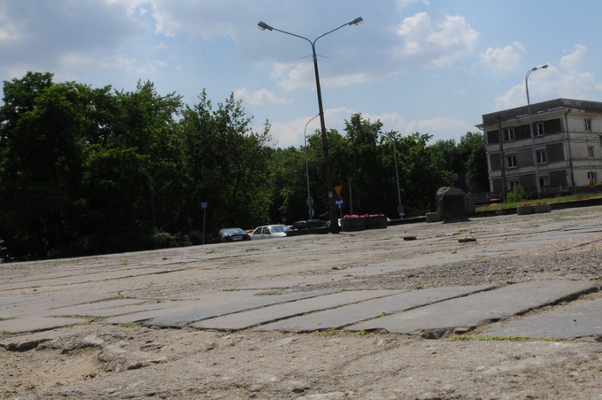
The Old Market Square in Łódź
As tends to happen at the end of the year, a little grumbling is in order. That Łódź is a different city from all the rest, I probably no longer need to prove to anyone. Sitting in front of my computer, I realised yet another fact that sets this place apart. We have no Old Market Square!

Foggy Wanderings Around Łódź
Some time ago I went on night-time wanderings around Łódź. The city seemed to me empty, sad and gloomy then. On a certain foggy evening I wanted to set out again and capture the beauty that Łódź hides somewhere within itself.