How AI is killing Tailwind CSS, which it promotes itself

“We have six months left to live” – these words from Adam Wathan, creator of one of the world's most popular front-end development solutions, hit the programming community like a bolt from the blue. But don't worry, this isn't a story about code errors or hackers. It's a story about how artificial intelligence, delighted with a solution, can inadvertently... suffocate it.
But before we move on to the drama that unfolded on Twitter and GitHub, let's explain what all the fuss is about.
What is Tailwind all about?
In the world of the internet, websites are divided into two parts. One is the “engine” that you don't see (backend) – this is where all the magic happens with databases and logic. The other is the frontend—everything you see on the screen: buttons, colors, fonts, and layout. This is the “face” of the website that you interact with.
Imagine you are building a house out of blocks. Instead of carving each block from scratch, coloring it, sanding the edges, and checking if it fits with the rest, you get a box of ready-made elements. One says “red,” another “rounded corner,” and another “large gap.” All you have to do is put them together. It's like building a huge castle out of Lego blocks.
That's how Tailwind works. It's a set of ready-made “labels” (classes) that developers apply to website elements to make them look modern and professional. This tool is used exclusively to take care of the appearance—i.e., the frontend. You don't have to write hundreds of lines of complicated code describing every detail—you just use ready-made solutions.
Importantly, Tailwind introduces strict visual discipline to the website. Thanks to it, the programmer does not have to wonder whether a particular button has the same shade of blue as the previous one, or whether the contact form matches the rest of the website. By using the same “labels,” we can be sure that every button, text field, and header on the entire website will look identical. It is this standardization that makes the website look like a coherent, professional product rather than a random collection of elements.
Tailwind has become the standard. It is free, fast, and based on the Open Source model. It was this openness that was its greatest strength—anyone could look inside, suggest improvements, and contribute to the tool completely free of charge. As a result, a huge, loyal community grew up around Tailwind, making it the most popular solution in the world. Its creator, Adam, built a great business around it: he gave the framework itself away for free as a common good, but sold beautiful, ready-made templates and components to those who wanted to work even faster.
And that's where AI comes in, all in white.
The deadly grip of artificial intelligence
In recent months, Tailwind's popularity has skyrocketed. Why? Because AI loves it. If you ask ChatGPT, Claude, or Gemini to design a website, 9 times out of 10 they will use Tailwind. Artificial intelligence has recognized it as a visual standard and promotes it at every turn.
This phenomenon is driving a new, growing group of creators, often referred to as VibeCoders. These are people who don't necessarily need to know every line of code by heart and understand what they are creating—they “code by clicking and writing prompts.” They send a request to the AI, evaluate the result (“vibe”), make corrections using subsequent commands, and in a few minutes receive a professional-looking frontend. For them, Tailwind is the perfect tool because the AI handles it brilliantly, instantly generating a ready-made look for buttons or forms.
It would seem like a success story! Unfortunately, reality turned out to be brutal. Adam's business model began to fall apart for two reasons:
-
The death of documentation: In the past, to learn Tailwind, you would visit its website, read the instructions (documentation), and see ads for paid add-ons. Today? You ask AI, get ready-made code, and never visit the official website. Traffic has dropped by 40%, and with it, new customers have disappeared.
-
AI generates “paid” for free: Remember those paid components that Tailwind made money on? Today, all you have to do is send a prompt to AI: “Make me a Tailwind-style component,” and you'll have it for free in seconds.
When help becomes a guillotine
The turning point that revealed the scale of the problem was an innocent request on Github (a place where programmers keep their code). Someone suggested that the Tailwind team add a special llms.txt file. It was supposed to be a “cheat sheet” prepared specifically for AI robots so that they could learn Tailwind rules even faster and easier and generate code without referring to the official documentation.
It sounds very innocent, but...
Adam Wathan's response was brutally honest and full of despair: “Asking an open source developer to optimize documentation for LLM (AI) models right now is like asking a convict to help sharpen the guillotine.”
It wasn't just a metaphor. Adam revealed that the success of AI had become a death sentence for his company. Because artificial intelligence had “consumed” their years of work and was providing ready-made solutions for free, the business was no longer profitable.
Traffic to our docs is down about 40% from early 2023 despite Tailwind being more popular than ever. The docs are the only way people find out about our commercial products, and without customers we can't afford to maintain the framework.
The effects were immediate and painful: revenue from template sales fell by 90%. This forced Adam to make the most difficult decision of his life—to keep the company afloat, he had to lay off 75% of his team. The remaining employees stopped creating new features and began a desperate fight for survival.
It's a paradox: the more AI “helps” developers use Tailwind, the faster it kills the team that created and maintains the tool.
What does this mean for us?
The story of Tailwind is a stark warning. It shows that AI is changing the fundamental, unwritten agreement on which the modern internet was built. For years, this contract was simple: creators provided knowledge, guides, and documentation for free, and in return, we “paid” them with our presence. We visited their websites, read their ads, built their brand recognition, and sometimes became customers. It was a fair exchange.
AI is brutally violating this contract.
Artificial intelligence takes everything that creators have worked for, but gives nothing in return. Knowledge is “consumed” without visiting the website, without getting to know the author, without any support for the people who created it. The user gets a dry result in a chat window and no longer feels the need to go to the source.
In this way, AI becomes a parasite that eats away at the foundations on which it grew. Because if creators like Adam stop creating because they can't pay their bills, where will AI get its knowledge from in the future? Today, AI “takes” because it can. But it does not give creators the fuel they need to continue developing. It is a one-way street that leads to the depletion of the internet of authentic, human work.
Conclusions for today?
-
Our enthusiasm for AI should not make us lose our vigilance. It is a powerful tool, but in the wrong hands (or in the absence of regulation), it destroys the foundations on which it was built.
-
If you use free tools that make your life easier, visit the creator's website from time to time. Without us, the users, these projects will simply disappear.
However, it is important that we understand each other correctly: AI did not kill Tailwind. The framework itself is doing great, will continue to be developed, and will remain the standard for building modern frontends. Tailwind CSS is not failing as a technology. But its creators were among the first to say out loud what many are only beginning to feel: the AI era is changing the rules of the game very quickly, and we are unable to keep up with these changes.
Artificial intelligence is changing the economy so much that the companies that built our digital world are simply no longer financially viable.
It's worth remembering this the next time you click “Generate.”
Remember that you can also try to block AI bots from taking content from your site.
View related articles

Awarie IT zdarzają się każdemu
Od paru godzin trwa awaria komunikatora internetowego Slack. Kilka tygodni temu nie można było korzystać z usług firmy Google, a jeszcze wcześniej spora część Internetu nie działała z powodu awarii usług Cloudflare. Czy to możliwe, że usługi w chmurze są niedostępne?
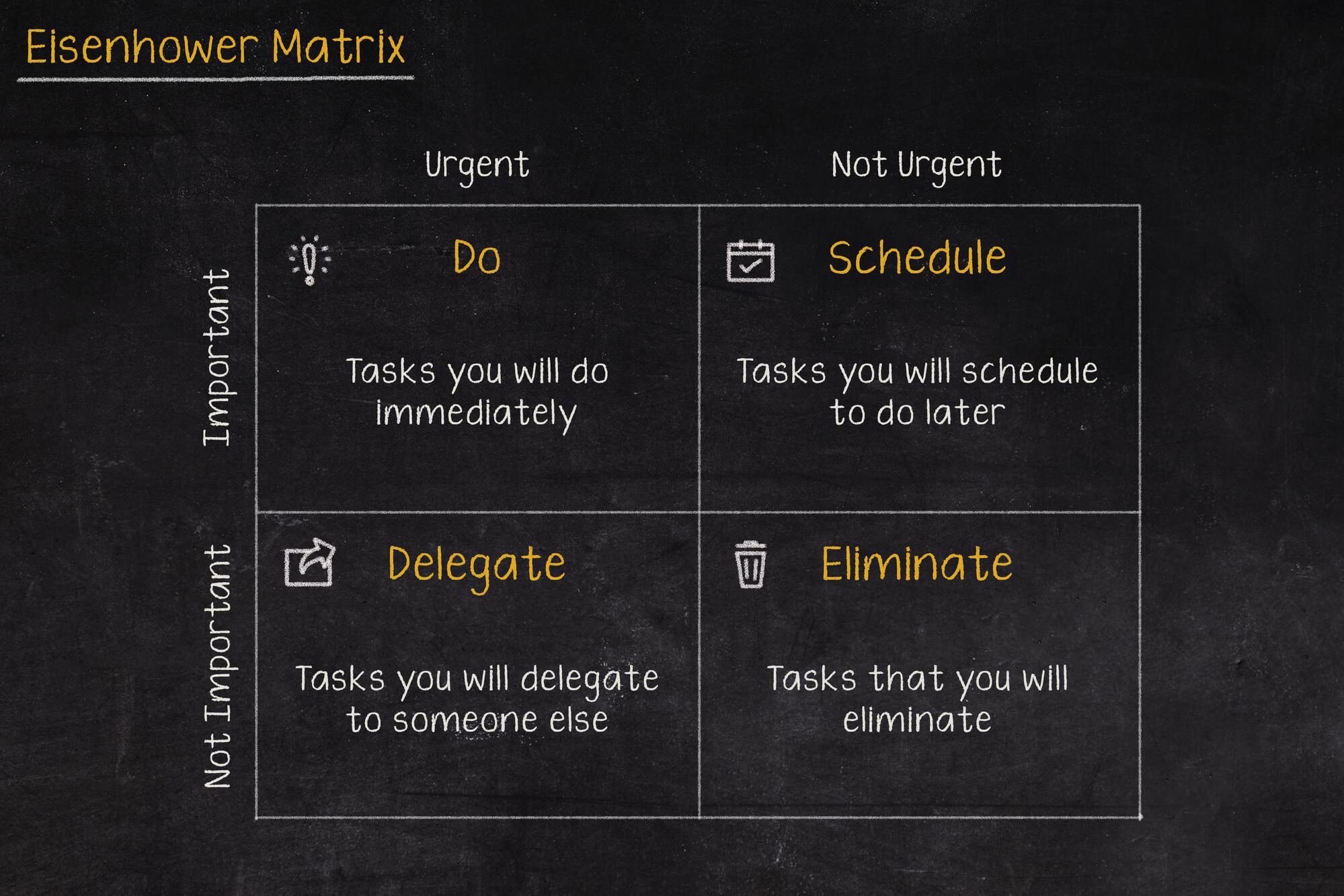
Macierz Eisenhovera, czyli jak zapanować nad priorytetami?
Iść na przerwę a może odpisać na tego maila, czy odebrać telefon od przełożonego? W jakiej kolejności zająć się tymi zadaniami, aby nie utracić nad tym kontroli i nie popaść w bezsilność? Rozwiązaniem tych problemów może być Macierz Eisenhowera (nazywana także Matrycą lub Kwadratem Eisenhowera).

Czy Alert RCB powinien informować o wyborach prezydenckich?
Komunikacja w niebezpieczeństwie jest jednym z ważniejszych zagadnień jakie się porusza podczas żeglowania, latania czy nurkowania. Ostrzeżenia potrafią uratować życie, dlatego nie powinny być lekceważone, a tym bardziej nie powinny swoją treścią prowadzić do ich zignorowania.