5 mistakes to avoid to build a better one-person company

Not every type of enterprise is suitable for a sole proprietorship. Not all kinds of enterprises are good for a lone founder. Many businesses are impossible to grow and run when you're a one-person craftsman. So how do you find a business that can be easily grown as a sole founder or a small team?
Understanding and learning a few simple rules can save you years of frustration. Unfortunately, I learned this the hard way over almost two decades. Every day I see entrepreneurs making the same mistakes, mainly because we naturally imitate what big companies do.
Table of contents
Don't think globally. Think locally
At every step we're under the influence of big companies, global successes. We constantly read about startups that achieved international success in a few years. What's more, we're under the influence of these companies and we use their services ourselves. Just think of Slack, Notion, Clickup, Gmail or Netflix.
All these companies have a few features in common:
- they need an enormous number of customers to operate,
- their main target is consumers,
- the services are sold at a very low price, where there's often a free package,
- they're available globally,
- they have an enormous amount of capital.
As a small entrepreneur, don't model yourself on such companies. It will only lead you into frustration and often end in bankruptcy. So what can you do better?
Avoid products and services that require an enormous number of users
As a beginning entrepreneur, you'll largely finance your business with your own funds. It's then difficult to create an effectively operating business on many markets, powered by an enormous number of users. You'll have neither the time nor the funds for it.
Besides, all those big businesses didn't pay for themselves for a long time and were supported by external financing. Only after many years did they become large enough to start turning a profit.
A large number of customers requires hiring people to handle them and automating many services (accounting, email notifications, mailings). As a small enterprise you can't compete with their spending or incur losses over long periods of time.
Don't play the low-price game
Lowering the price is one of the most common ways of winning a customer. That's a mistake! Winning a customer and their trust is very difficult. Sales, marketing and customer service consume a lot of time and financial resources. That's why if you have low prices, you have to reach hundreds of thousands of customers, which in turn translates into higher maintenance costs, which requires winning more customers. The effect of scale.
I see a lot of businesses that rely on selling a product or service for 49 zł. Why does it look like this? We model ourselves on other companies that do this and replicate the pattern. If you work hard and win 100 customers, you'll earn 4900 zł. And now factor in the costs of running a business, the costs of your work, etc. And now think about giving away a free package like Notion or Slack?
Look at Gmail. It's one of the most popular email providers (and not only). Its services, which offer really a lot, are available for free. Do you think that if they forced a charge of 10 zł a month, people would still use it?
A definitely better solution is to offer services for the B2B sector. It's easier to win a customer (a company) that will pay even 100 times more for your services than a consumer.
The B2B market, not B2C
At the very start of your journey, direct your services or products at other entrepreneurs. It's one of the easier ways to avoid the challenges related to scale, low prices or consumer rights. Selling to companies is significantly simpler and you can offer higher prices. Enterprises are more willing to spend money on products or services that allow them to grow, and that translates into their revenue.
A good example here would be providing training, marketing services or consultations. Many companies have large budgets that they have to spend on services of this kind. In the case of the consumer market it's completely different. There, customers are more cautious about spending and look above all for a low price.
A smaller market is a nicer market
At the very start it's better to focus on some niche or small market. Better to be the biggest fish in a lake than an average one in the ocean. Operating in a narrow specialisation and on a small market, you can concentrate on all your customer's needs. And what's more, there'll be no competition there.
When I started my first podcast, I wanted to make it about business, marketing or IT. It would have been one of hundreds of podcasts of this kind. I decided to create a small business based on a podcast for divers - spodwody.pl. It turned out to be a bullseye! It's the only and first podcast about diving in Poland, which is growing quickly and brings interesting and profitable projects.
By choosing a niche, you can create your own communities and quickly become an expert in them.
Good luck!
View related articles

IT outages happen to everyone
For the past few hours the internet messenger Slack has been down. A few weeks ago you couldn't use Google's services, and even earlier a large part of the Internet wasn't working because of an outage of Cloudflare's services. Is it possible that cloud services are unavailable?
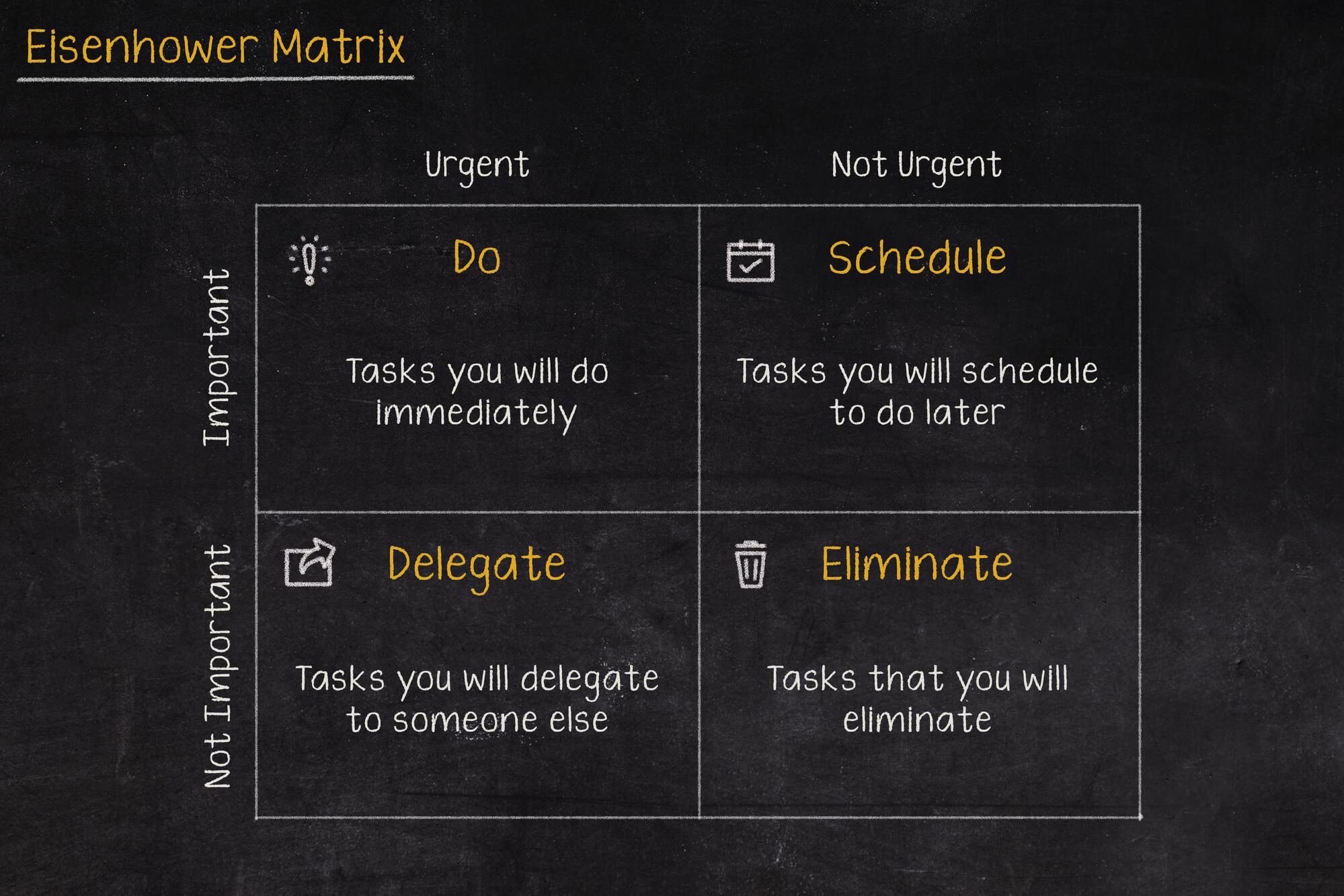
The Eisenhower Matrix, or how to take control of priorities
Go on a break, or maybe reply to that email, or pick up the phone from your boss? In what order should you tackle these tasks so as not to lose control and fall into helplessness? The solution to these problems may be the Eisenhower Matrix (also called the Eisenhower Box or Eisenhower Square).

Should the RCB Alert inform about the presidential elections?
Communication in an emergency is one of the more important topics covered during sailing, flying or diving. Warnings can save lives, which is why they shouldn't be treated lightly, and even more so shouldn't, by their wording, lead to their being ignored.