Refund fraud, return scams, or attacks using AI

You’re buying something on OLX. The price is great, communicating with the seller is a breeze, and to top it off, you get a perfect receipt as proof. Everything looks safe and sound. It’s only later that you realize you’ve been left with no money and no goods, and that whole “confirmation” was just a blatant lie generated in seconds by AI.
In one of my episodes, my guest was Maciej Słomczyński, who spoke candidly on camera about how he was scammed out of four fake concert tickets. If you haven’t seen this conversation yet, I highly encourage you to watch this episode on my channel. It’s a great lesson showing how strong emotions can override logical thinking.
The good news is that Maciej is now much more cautious online. Maciek wanted to buy a speaker on OLX. The price was suspiciously low, which should have immediately raised our suspicions, so as a precaution, he asked the seller for proof of purchase. What did he receive? AI-generated proof of purchase for this speaker—a perfectly forged receipt intended to prove that the equipment was genuine and came from a legitimate source. At first glance, everything looks very good.
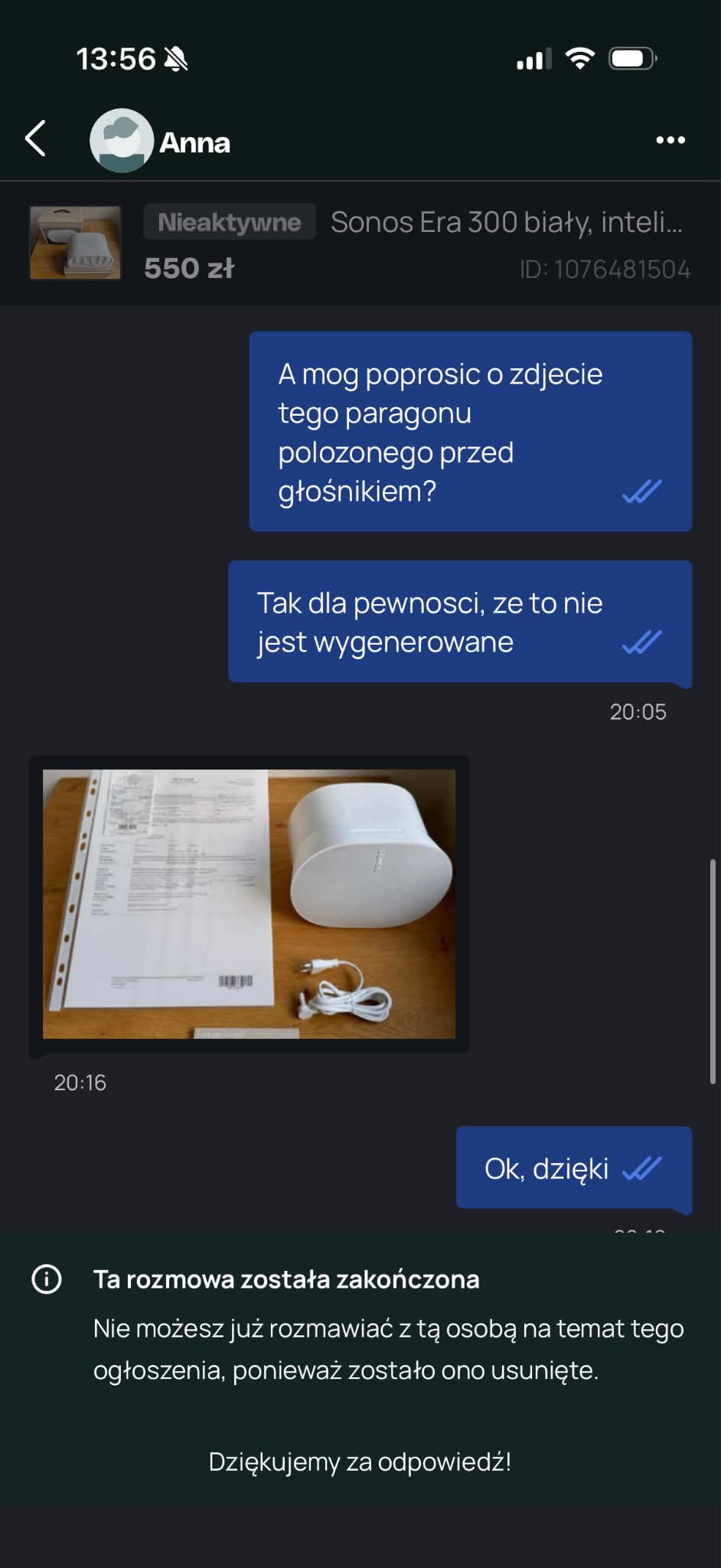
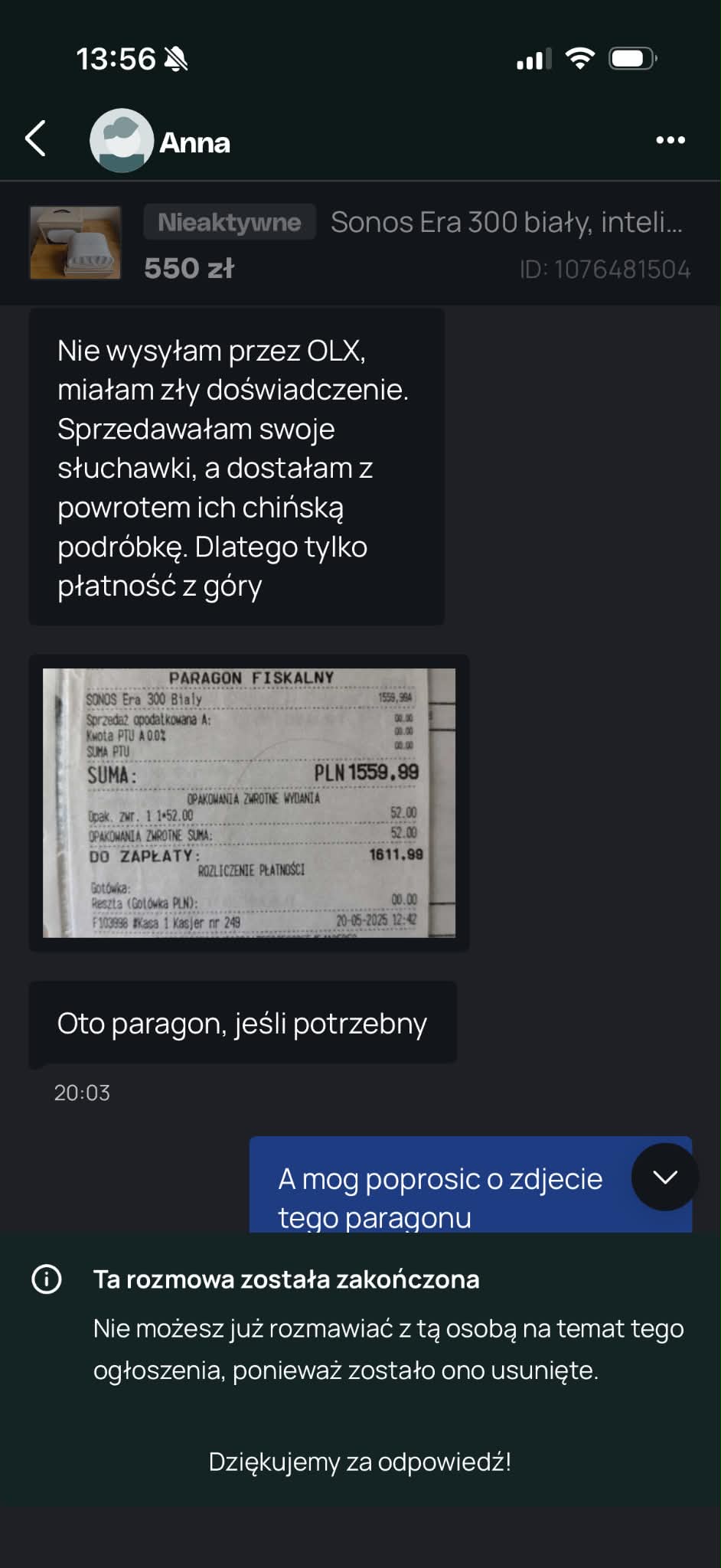
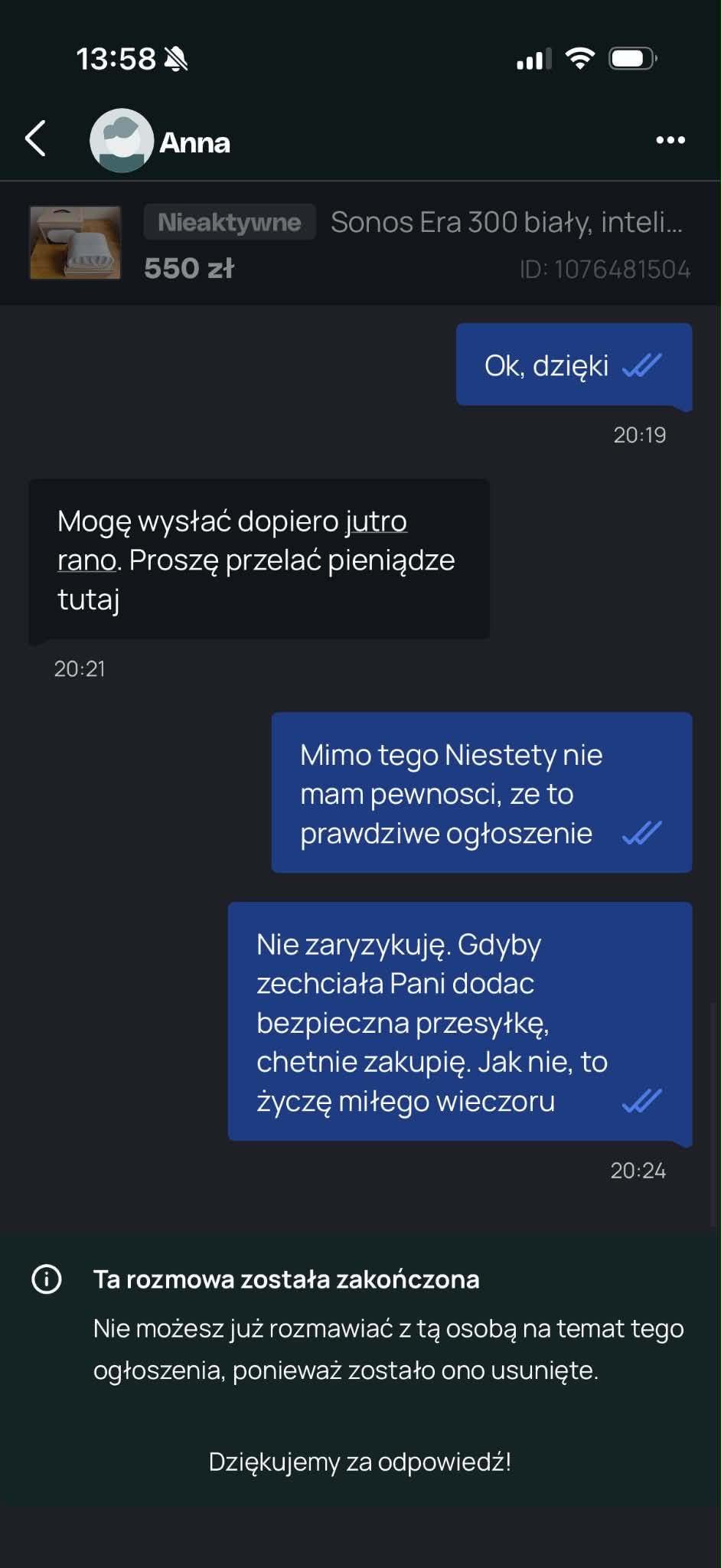
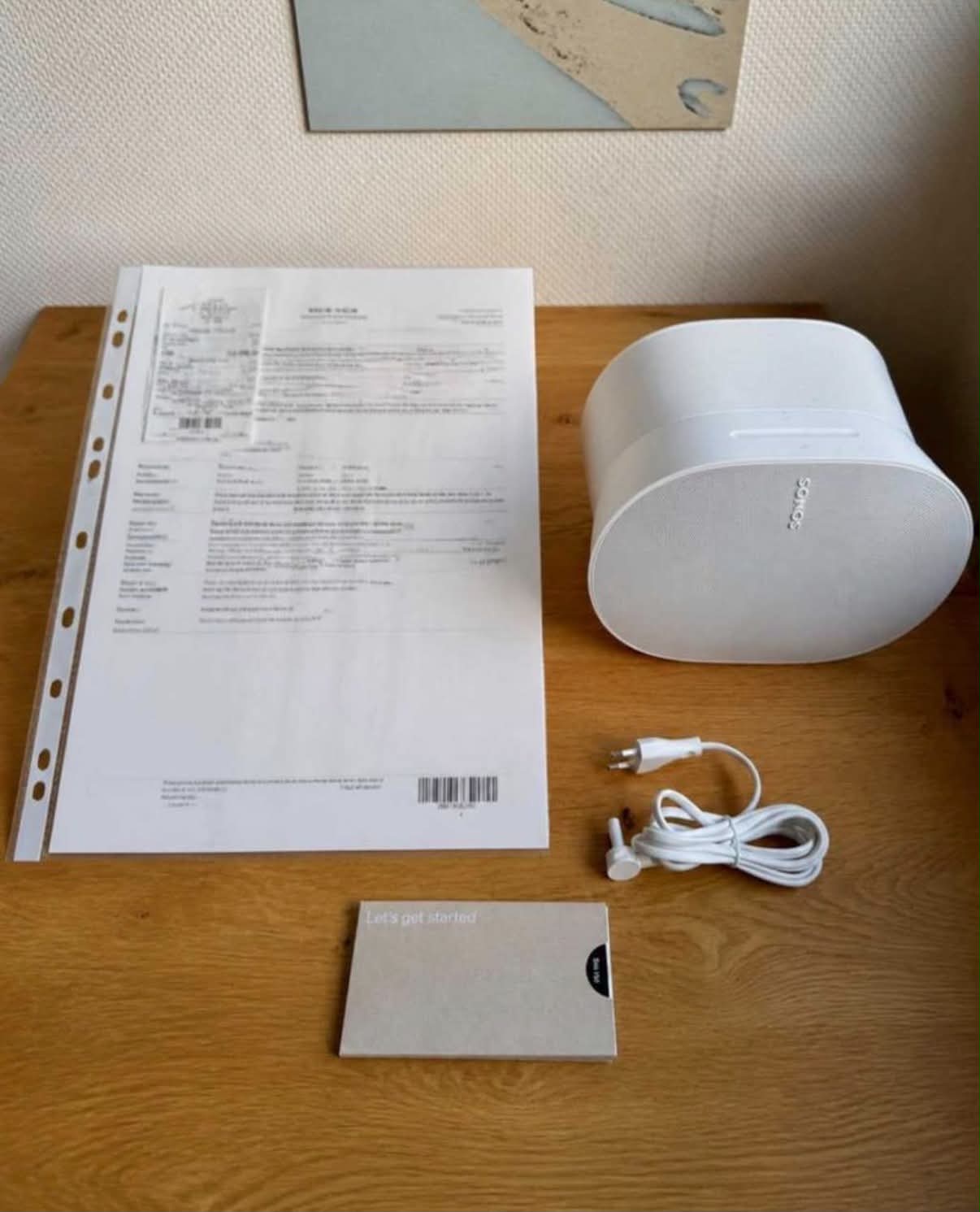
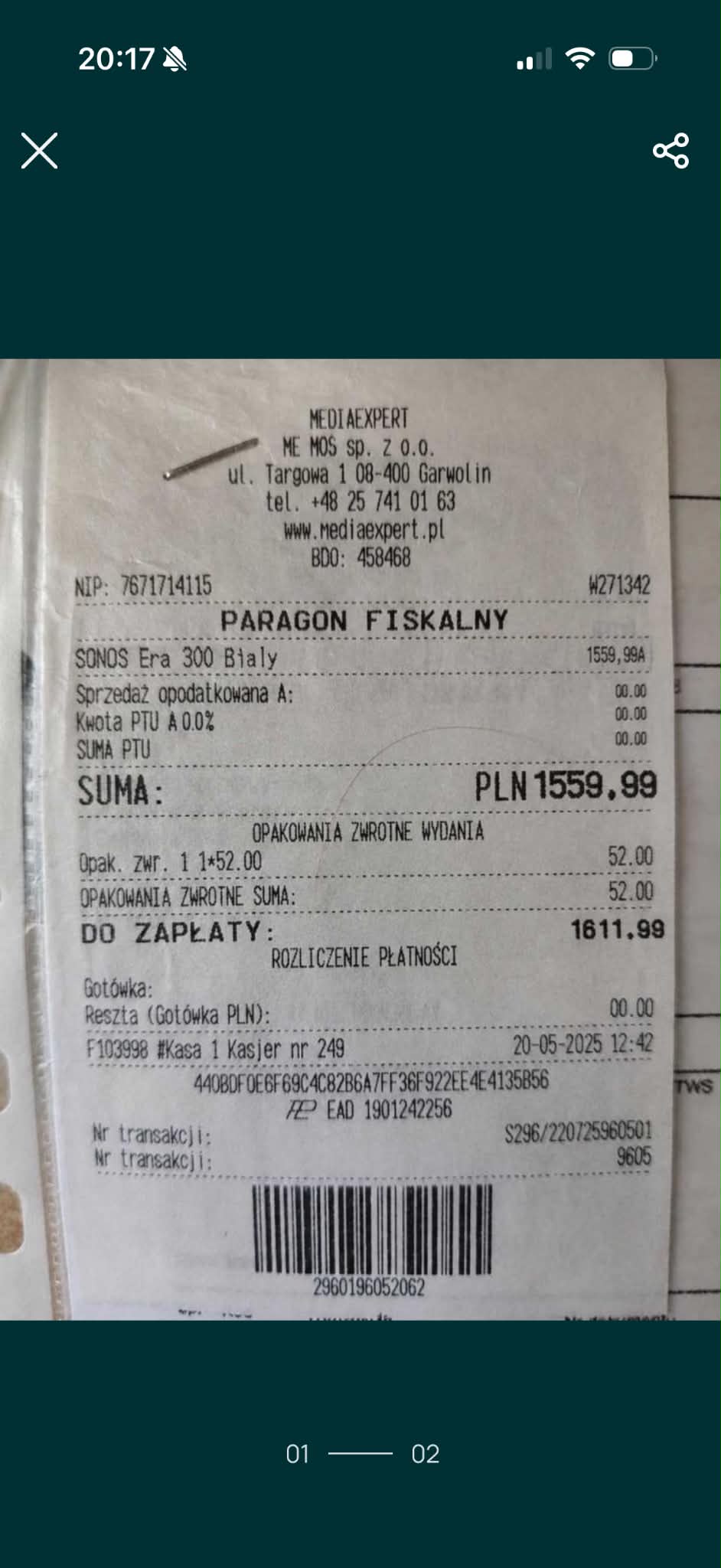
But the devil is in the details. When you take a closer look at this “document,” it turns out that the algorithm has completely lost its way. The receipt generated by the tool doesn’t mention VAT at all, but instead shows... an item for a packaging refund. Absurd? Of course. But as Maciek himself aptly summed up the situation: “If they hadn’t already ripped me off before and I hadn’t become suspicious, I would never have noticed it.” And that’s exactly the point—the scammer is counting on you to glance at the document in general, get swept up in the euphoria of a successful purchase, and not analyze every line of the fine print.
In the past, forging an invoice or receipt required at least a basic knowledge of graphic design software. It took a lot of effort to adjust fonts and align tables. Today? Criminals have harnessed artificial intelligence for this purpose.
You don’t have to scour the dark web for fake purchase receipt generators. They’re right at your fingertips. It’s ChatGPT and similar tools that you have at your disposal.
A similar mechanism is used in a phenomenon known as refund fraud or return scam. This method involves extorting refunds from stores and shopping platforms. Criminals order an expensive product and then demand a refund, claiming that the package was empty, damaged, or never arrived at all. To convince customer service, they send AI-generated courier damage reports or fabricated photos of damaged boxes.
Recently, an example of this kind of scam appeared on the Allegro sellers’ community forum. A buyer from the Czech Republic purchased a set of cosmetics, and then, a month later, filed a complaint stating that the package was intact but the products inside were damaged. He added the following description: “Yesterday was my grandfather’s birthday; this was a gift for him, but he was disappointed because everything was damaged—the package wasn’t opened until yesterday.”

He attached a photo of the allegedly damaged Hugo Boss perfume bottle to his complaint. The photo looked suspicious, so the seller verified its authenticity using software that detects AI-generated content. The program confirmed the forgery with 98% certainty. The complaint was rejected by the seller, but Allegro’s chatbot automatically joined the discussion, and we are currently awaiting further developments. The entire case, as a cautionary tale for other sellers, can be followed directly in the thread on the Allegro community forum.
This type of attack also targets pizzerias and popular food delivery apps (such as Pyszne.pl, Bolt Food, Uber Eats, and Wolt). Scammers order food, eat it, and then use ChatGPT or other image generators to alter photos of the meal so that it appears spoiled or incomplete.
And this is where an absolutely absurd and ironic loop occurs—very often, it is the AI algorithms on the platform’s side that automatically evaluate these complaints and are easily fooled. Large services are implementing automated assistants to cut customer service costs. The result is that the artificial intelligence, which is supposed to protect the platform from losses, mindlessly accepts fake evidence sent by other AIs. The scammer easily extorts a cash refund or a coupon for future purchases, and the free food ends up in their stomach.
Sometimes, however, scammers are undone by plain old human stupidity. An interesting example is an attempted scam at Capital Pizza Rzeszów, where a customer ordered a salami pizza through the Pyszne.pl website.
According to reports, one customer complained to the platform that she had received a Margherita pizza instead of the pepperoni pizza she had ordered. The problem is that the “proof” she sent was a photo that had been altered by AI. The person behind this manipulation didn’t even check the image carefully before sending the complaint—and the generator left a few classic mistakes. The AI completely failed when it came to the physics and geometry of the cardboard box. The original box from the pizzeria had cut-off corners, but after the “magic of AI,” it suddenly turned into a perfect square.
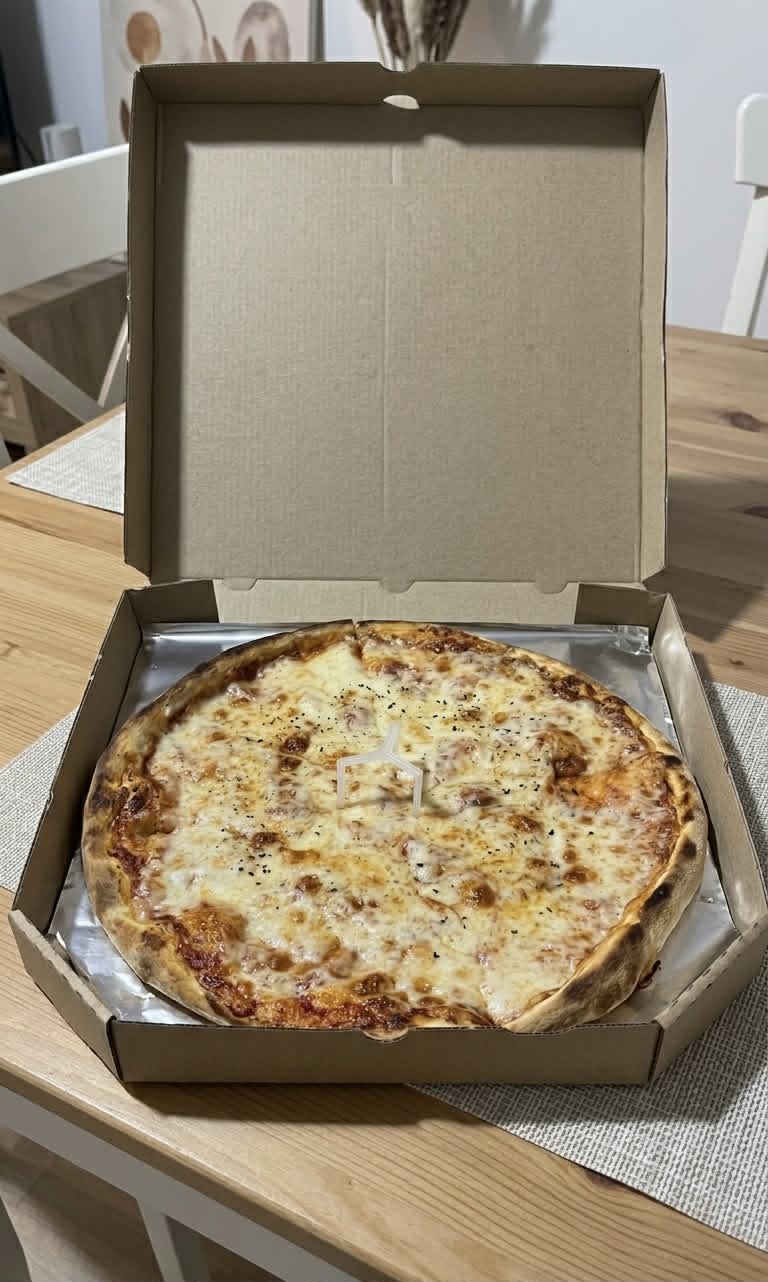
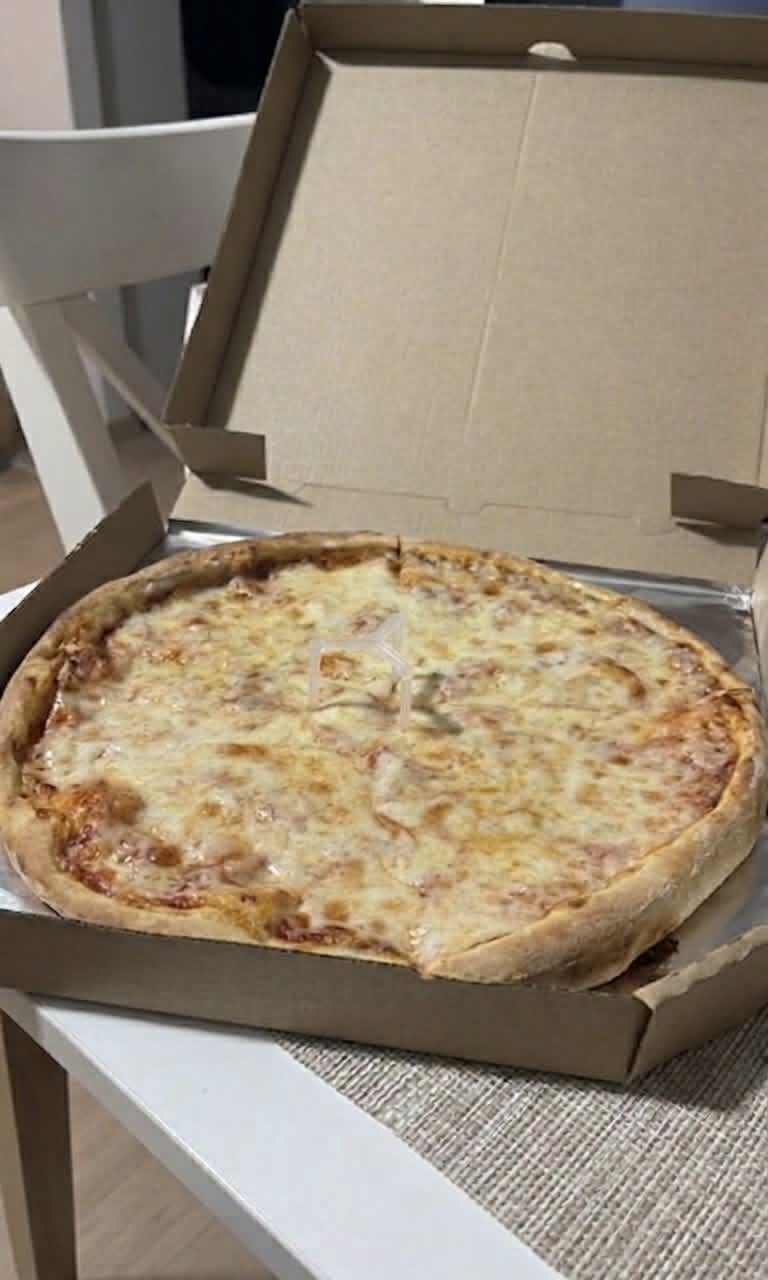
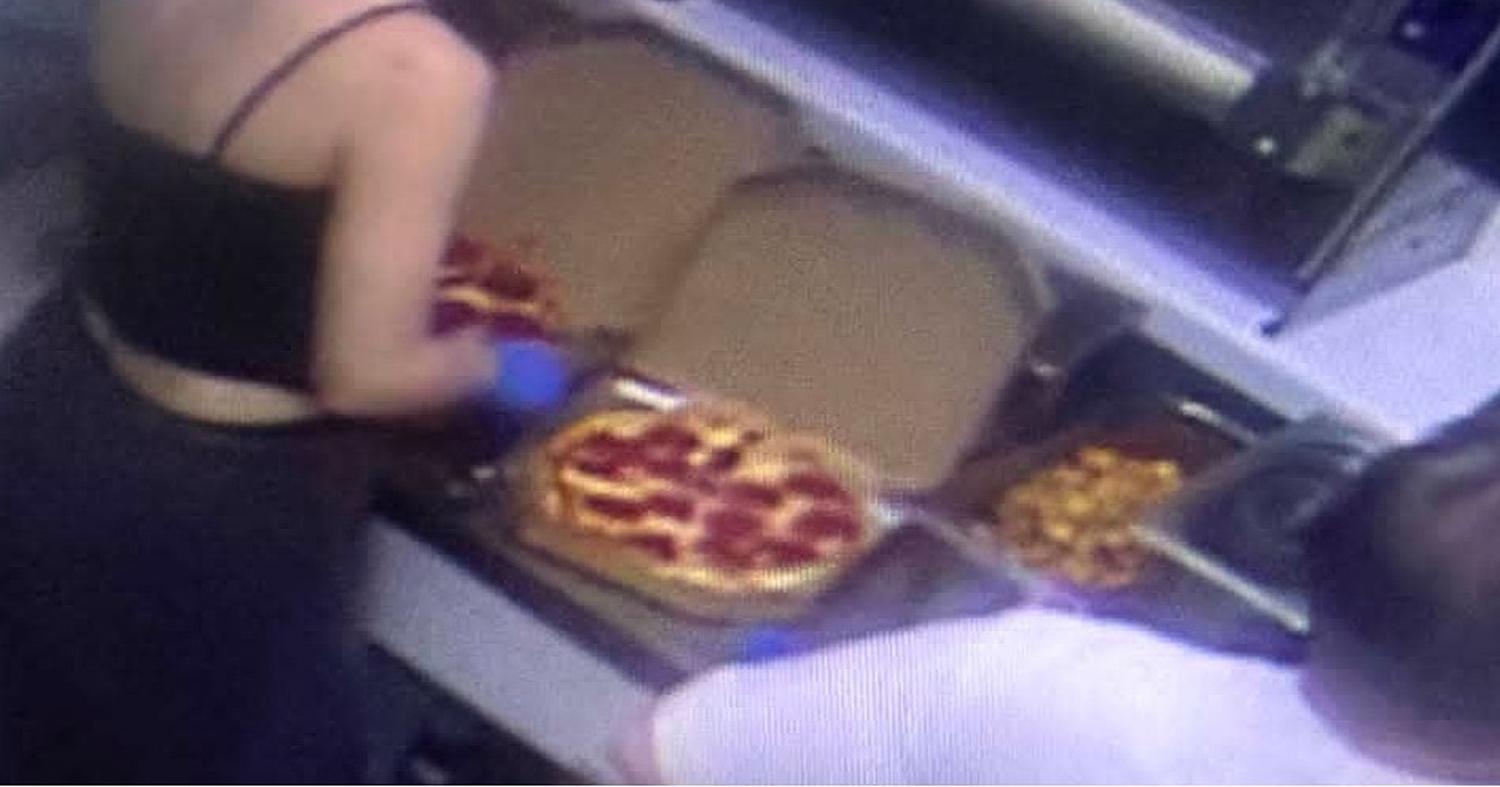
An employee at Pyszne noticed these glaring irregularities, and the pizzeria itself had footage of that specific order being prepared, as well as photos confirming that the correct pepperoni pizza had left the premises. The whole thing turned out to be a blatant attempt to extort a refund for a mistake that simply didn’t happen.
This shows just how challenging it is to verify any digital evidence.
Why are we so easily fooled?
However, the mechanism behind this scam isn’t based on advanced technology. That’s just the backdrop. The real driving force behind this scheme is our emotions.
When we see a speaker worth 1,500 PLN listed for 700 PLN, our brain immediately goes into search mode, looking for evidence to confirm that this offer is real. We aren’t looking for flaws—we’re looking for anything that will silence our inner doubts. We want it to be true. We want to feel that triumph: “I beat the system, I bought it cheaper!”
And the scammer knows this all too well. By sending a fake proof of purchase, they give us exactly what we crave most at that moment—an alibi for our own greed. If we hadn’t succumbed to the vision of an incredible deal, the speaker would have simply slipped through our fingers, and we would have lived with the knowledge that we’d missed the opportunity of a lifetime.
However, if we had analyzed the situation with a cool head, we would have noticed a host of red flags:
- A suspiciously low price (no one gives away good stuff for next to nothing),
- Time pressure (“Someone else is already asking about it; if you don’t buy it now, I’ll sell it to someone else”),
- Reluctance to meet in person and pressure for quick shipping.
But we’d rather look at the AI-generated receipt and tell ourselves, “Everything’s fine—after all, he sent the bill.”
And finally, I strongly encourage you to watch another important video. In this episode, I discuss the psychology behind phishing attacks and how social engineering and the manipulation of our emotions become the most powerful weapons in the hands of criminals. Learn how to cultivate a habit of healthy, controlled skepticism before you fall for another “once-in-a-lifetime opportunity” online.
View related articles

IT outages happen to everyone
For the past few hours the internet messenger Slack has been down. A few weeks ago you couldn't use Google's services, and even earlier a large part of the Internet wasn't working because of an outage of Cloudflare's services. Is it possible that cloud services are unavailable?
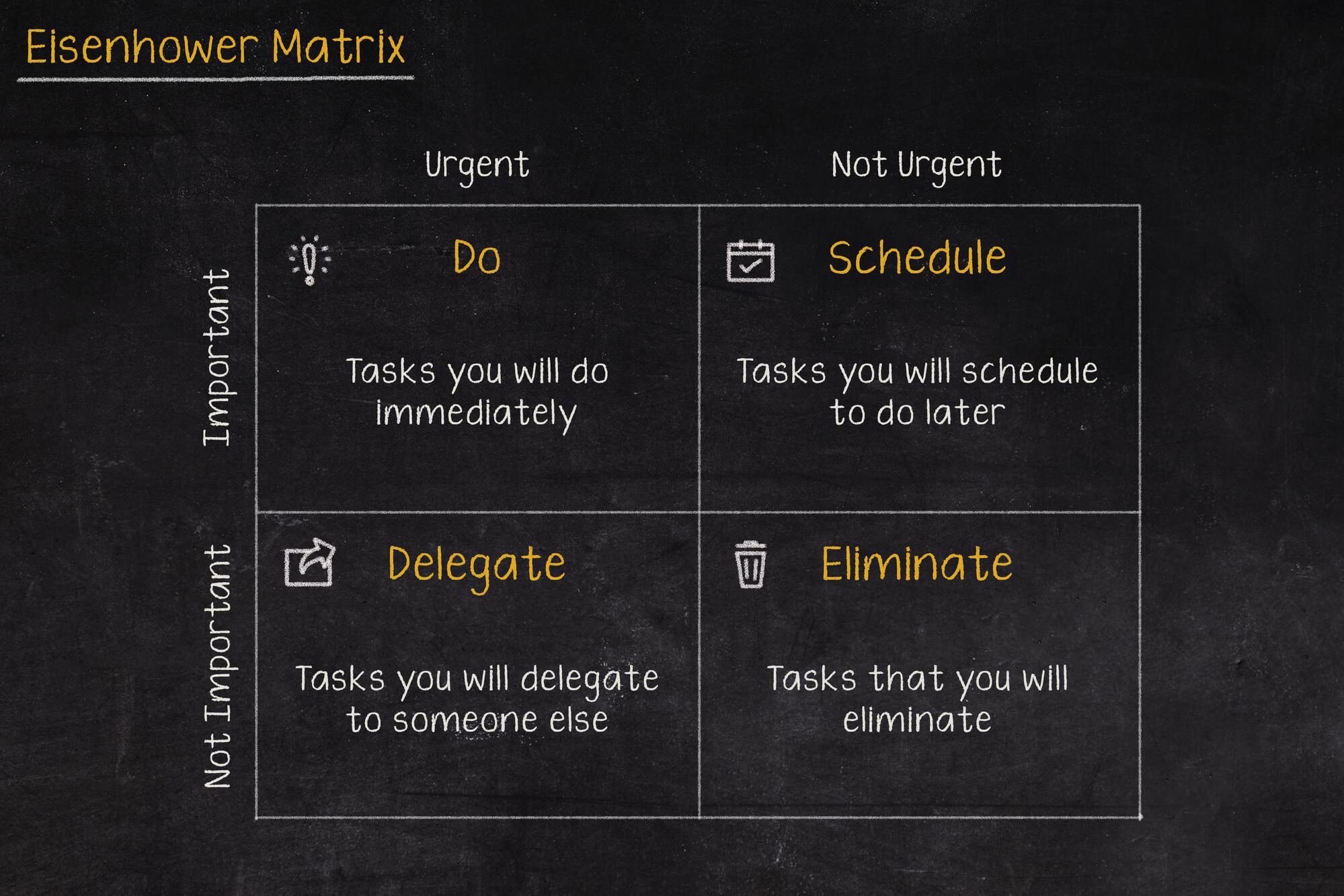
The Eisenhower Matrix, or how to take control of priorities
Go on a break, or maybe reply to that email, or pick up the phone from your boss? In what order should you tackle these tasks so as not to lose control and fall into helplessness? The solution to these problems may be the Eisenhower Matrix (also called the Eisenhower Box or Eisenhower Square).

Should the RCB Alert inform about the presidential elections?
Communication in an emergency is one of the more important topics covered during sailing, flying or diving. Warnings can save lives, which is why they shouldn't be treated lightly, and even more so shouldn't, by their wording, lead to their being ignored.