What's Worth Knowing When Heading to Iceland?
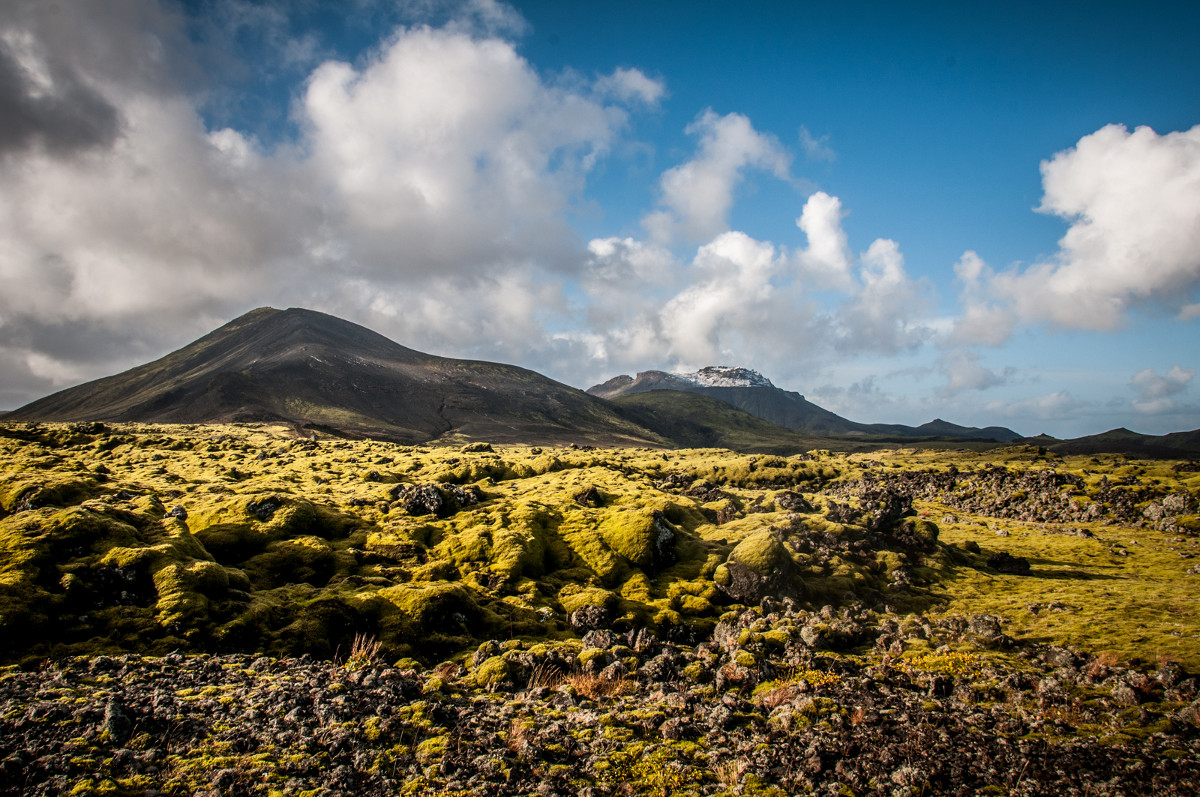
A coincidence of various chance events led me to Iceland. I spent a good while there and covered over 5,200 km, driving around the whole country far and wide.
Compared with Norway, which I'd visited earlier, Iceland's landscapes are decidedly more beautiful. Every so often you can come across waterfalls, mountain streams, volcanoes or glaciers. Every piece of the island is worth photographing and exploring.
If you're heading to Iceland for the first time, pay attention to a few important points I've put together to make exploring this country pleasant. Many things there can take you by surprise, and it's worth preparing for the trip.
The weather in Iceland
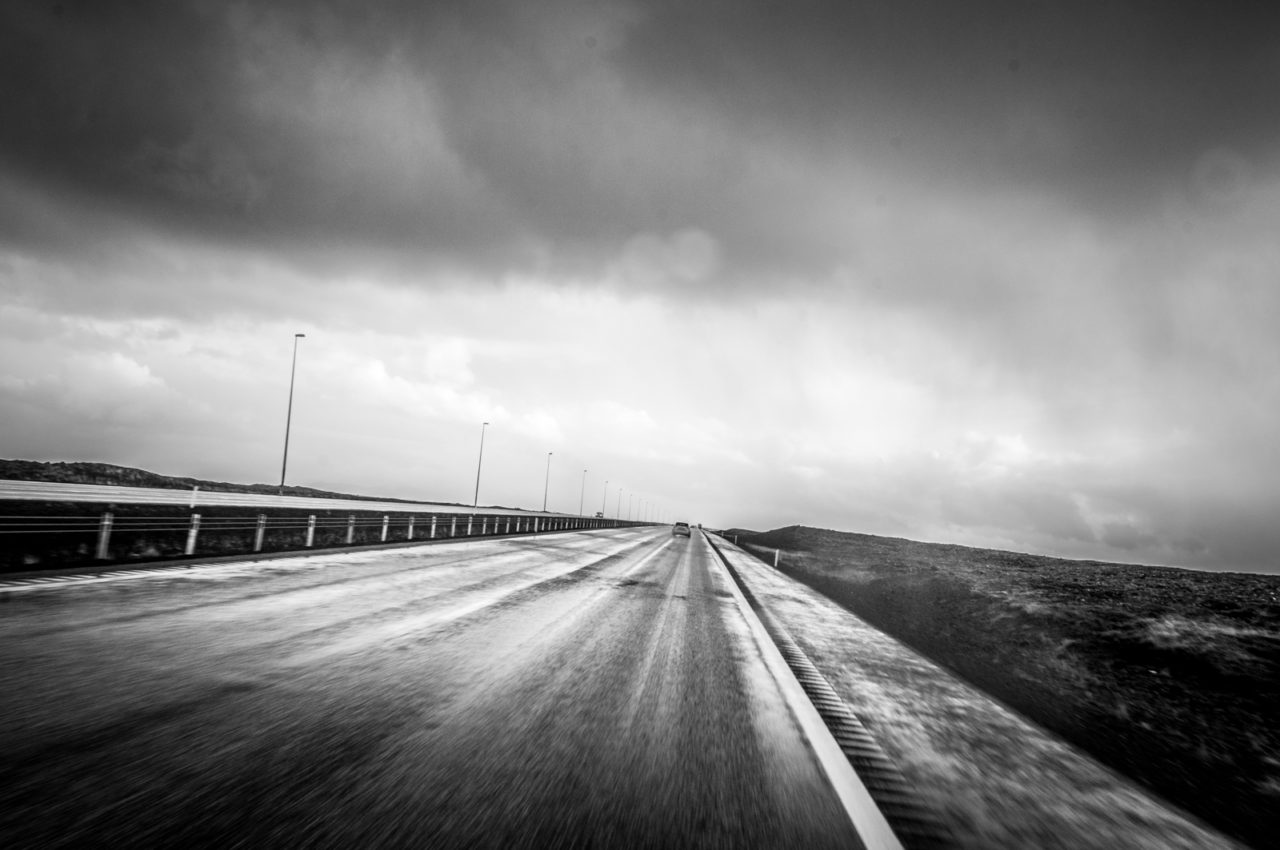
Iceland is best explored in summer. In July the days are longest there and there's practically no night, so you can travel around the clock and even take photos, since it's fairly bright. The biggest nuisance is the wind. In Iceland it really blows! The wind can be so strong that the rain falls horizontally.
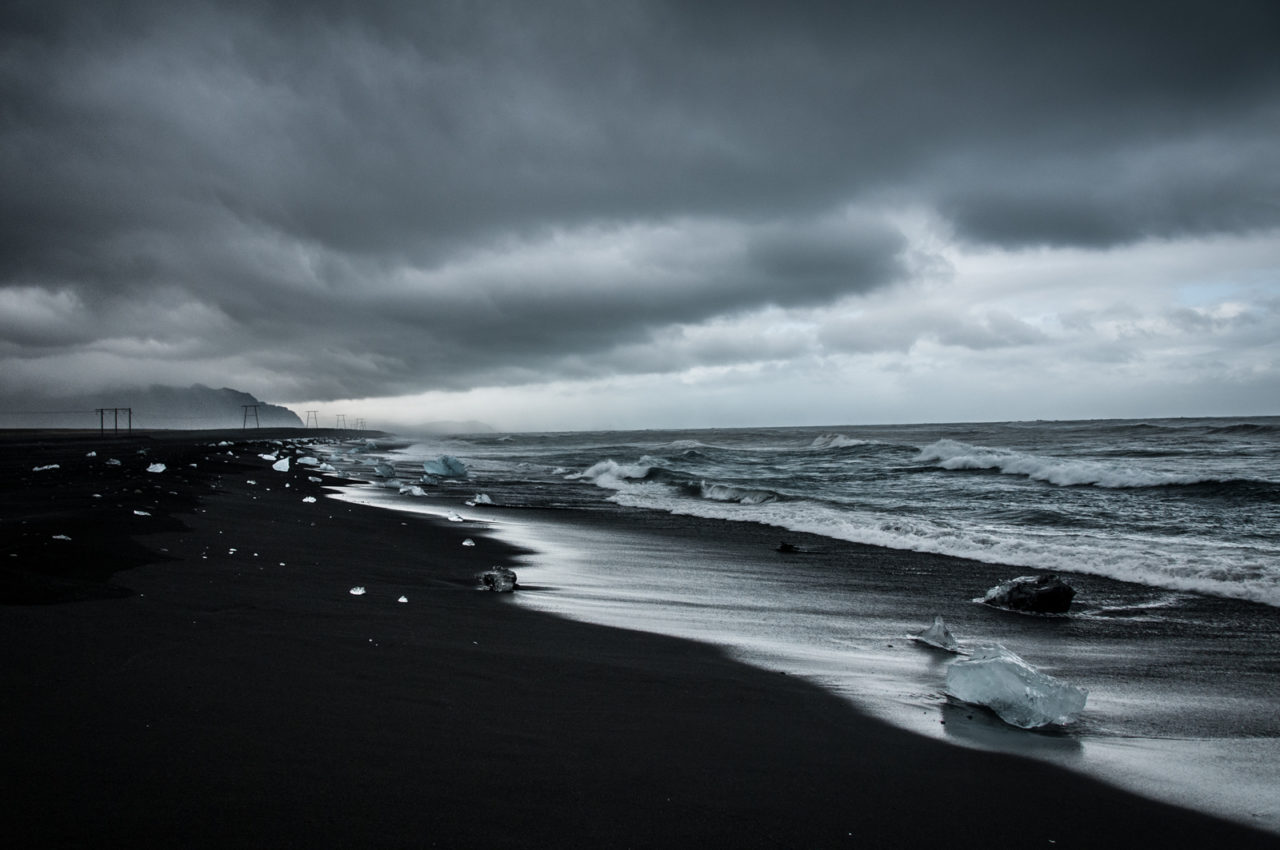
The southern coast of Iceland near Skaftafell National Park and the Jökulsárlón glacial lagoon.
The wind can be so strong that at the car rental, the staff warn you to hold the car doors firmly when opening them. It often happens that a strong wind can do a lot of damage, slamming the doors against another car or damaging the hinges.
The weather in Iceland can be very changeable, and a sunny day can turn cloudy. From dark clouds, thick, heavy hail can fall. The atmospheric conditions can change from one moment to the next, and it's worth being prepared for that.
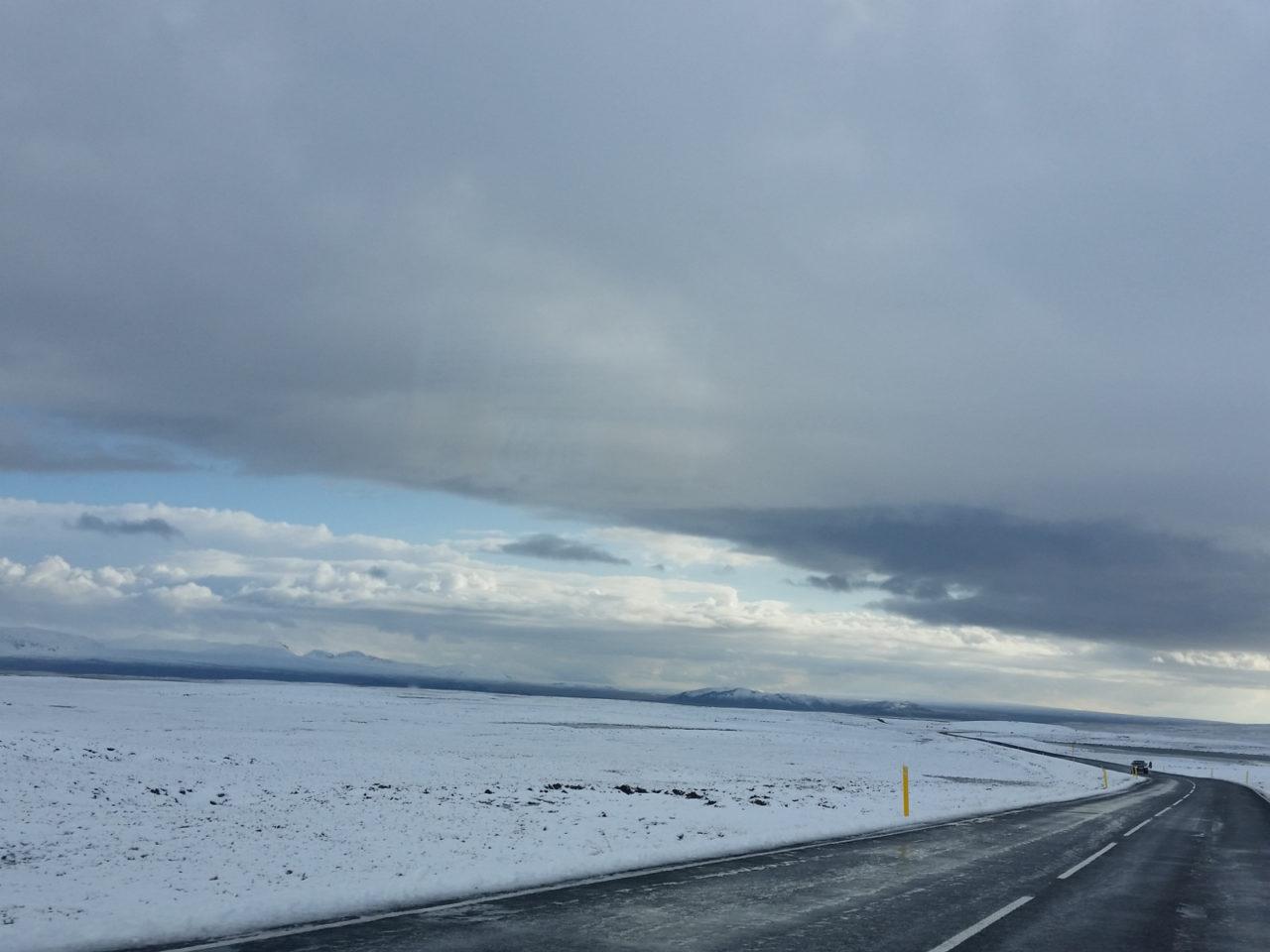
Road number 1 after a few minutes of snowfall.
Autumn and winter can be very harsh, although that's when the chances of seeing the aurora are greatest. I managed it on the last day. You can check the aurora forecast on the website en.vedur.is. In late autumn and in winter, many roads may be impassable even for off-road vehicles.
When heading to Iceland it's worth taking a hat, gloves (handy in strong wind when you're taking photos) and warm clothing. It's worth taking spare pairs of trousers or a jacket, which in heavy rain can get soaked very quickly.
Renting a car in Iceland
Iceland is best explored by car. It lets you reach many places, and very often you can quickly take shelter in it during heavy rain. In Reykjavík there are tourist offices that, for a very high price, will show you all of Iceland. Buses run between the larger towns, but unfortunately they don't stop at the places we'd want to explore. Very often we have to turn off the main road to reach a glacier or another tourist attraction.
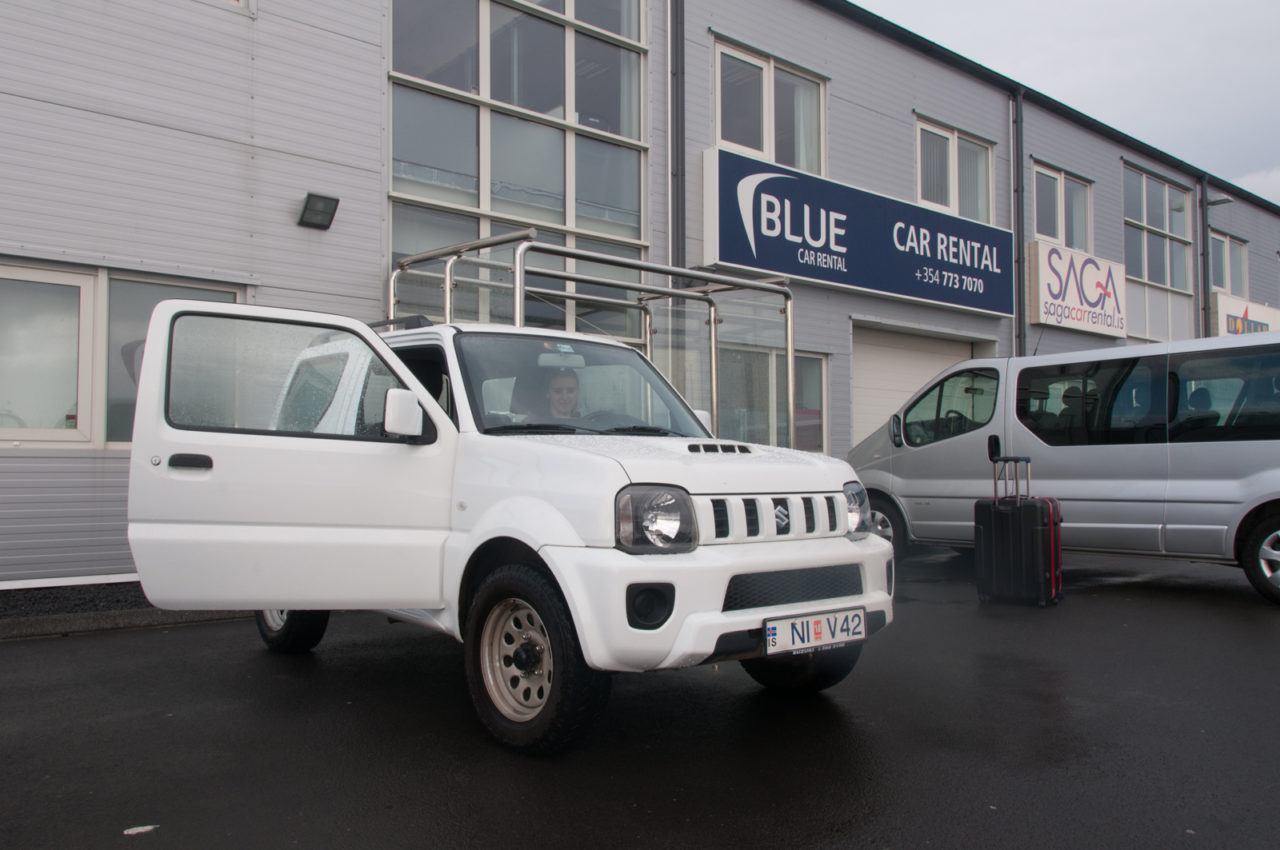
Popular rental models are the Suzuki Jimny or Grand Vitara. When renting a car, it's worth buying extra insurance, especially for the windscreen. Driving on the roads, sometimes gravel ones, it's easy to get a pebble in the windscreen, kicked up from under the wheels of other cars.
As for refuelling the vehicle, practically every petrol station is automatic and self-service. After inserting a credit card into the pump, we enter the amount we want to fill up for, then choose which pump we want to use and fill up the car.
Renting a Suzuki Jimny for a week with a full insurance package costs about 78,000 ISK, that is 2,000 złotys. A car without 4x4 drive can be rented for about half that price.
Roads in Iceland
The main road of Iceland is road number 1 (Icelandic: Þjóðvegur 1, Hringvegur). It circles the entire island, and its length is 1,339 km. It is mostly made of asphalt, although there are stretches made of gravel. Most tourists drive around all of Iceland on this very road. It is worth, however, sometimes turning off the asphalt onto a gravel road and heading to some interesting waterfall, or simply getting a taste of off-road driving.
Before setting off on a route, it's worth checking the website vegagerdin.is, where you can see the current weather conditions on a given stretch of route in the form of very clear maps. There are also webcams available, which show the current state of the road.
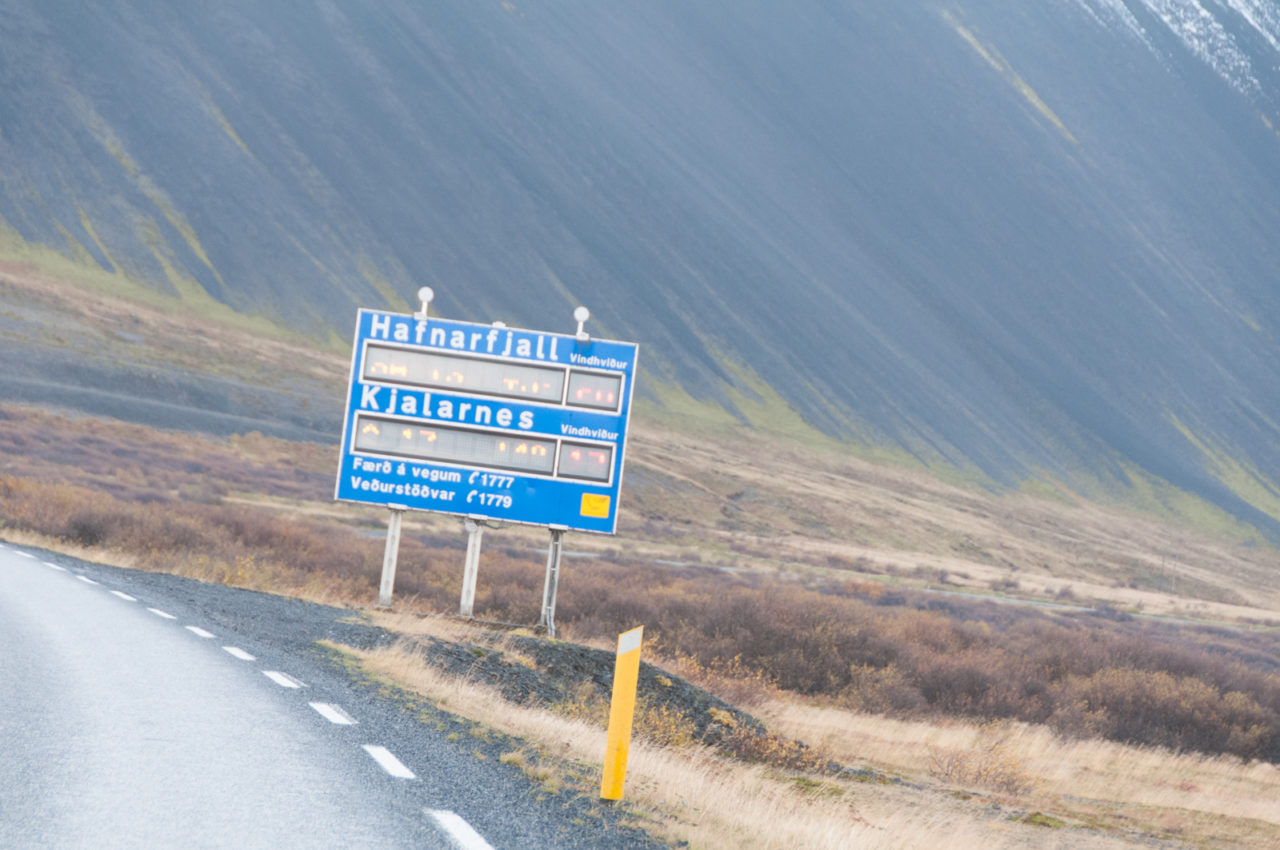
Useful weather information is also displayed on large boards by the road.
Food in Iceland
In hotels and restaurants the prices are very high. Outside the summer season, owners of hostels or guesthouses very often throw in a free buffet breakfast with the stay. In the larger towns you'll find the Bónus or Krónan chains. The prices are slightly higher than the ones we meet in Poland, and you can easily do your shopping for your expeditions. In the shops you can also find Polish sausages. In taste, though, they don't resemble them.

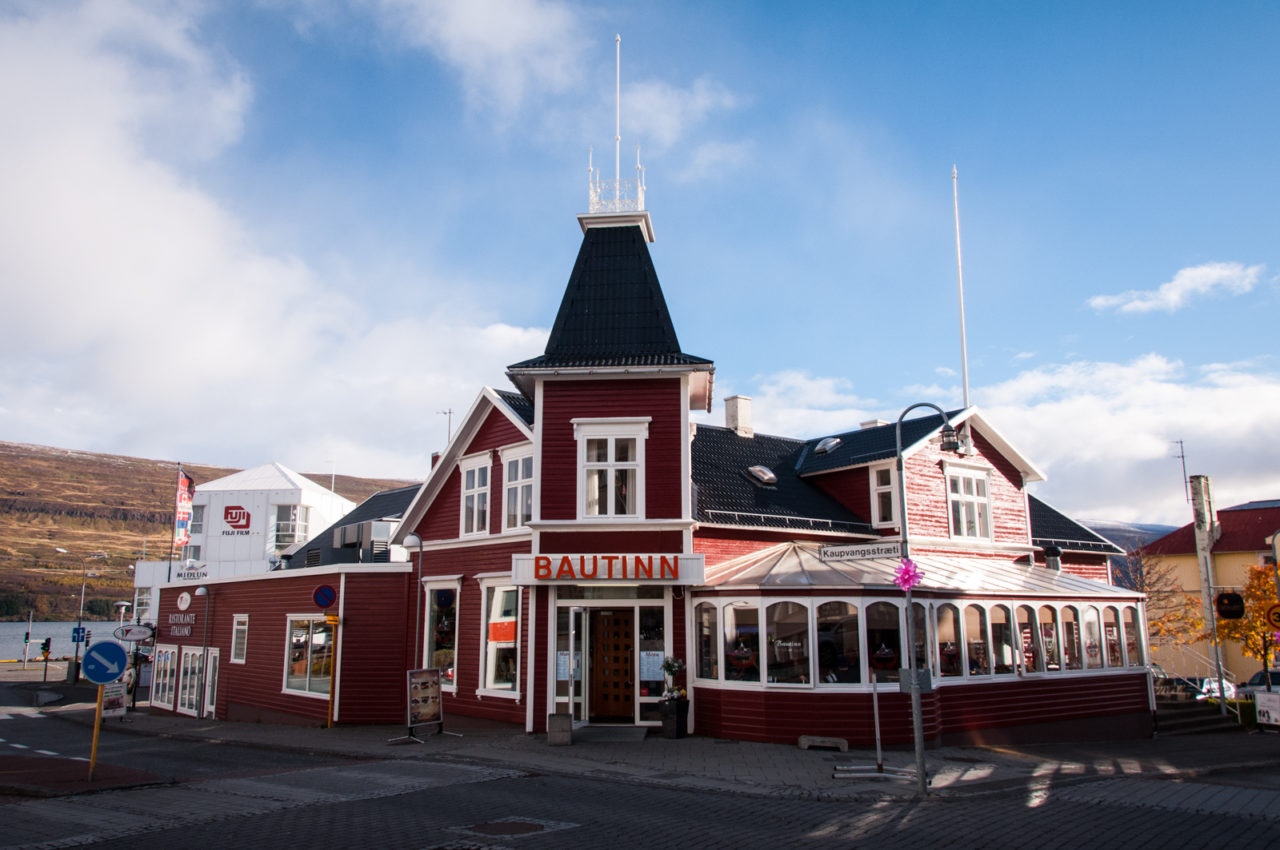
It's also worth tasting the local dishes. In Iceland you can eat grilled whale, a grilled horse fillet or delicious lamb. It's worth visiting the Bautinn restaurant in the town of Akureyri. They have a wonderful salad bar, tasty starters and really excellent local delicacies. In practically every restaurant you'll get a huge jug of iced water to start.
It's worth trying the whale steak. Iceland is one of the few places where you can eat it. The dish is served medium rare (fairly bloody) and that's when it tastes best. It's worth eating the steak fairly quickly while it's hot. Cold, it no longer tastes so exquisite.
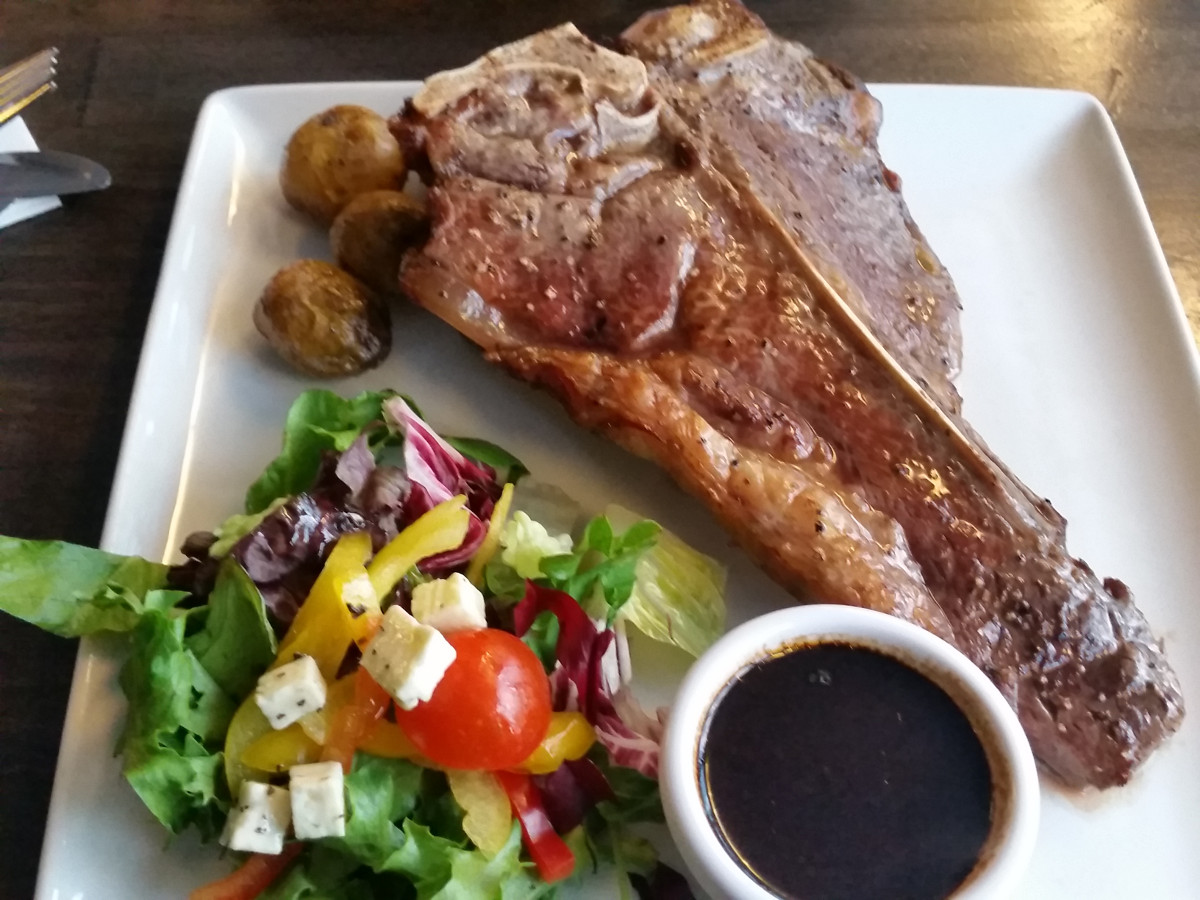
Another local delicacy is the lamb steak.
Accommodation in Iceland
The network of hotels, hostels and guesthouses is fairly plentiful on the island. In spring and autumn I recommend staying in them, on account of the weather. There are also regions of the country where you'll find one hotel per 150 km. It's also worth considering a stay in private guesthouses. Very often a stay in a hotel will be cheaper if we sleep in our own sleeping bags.
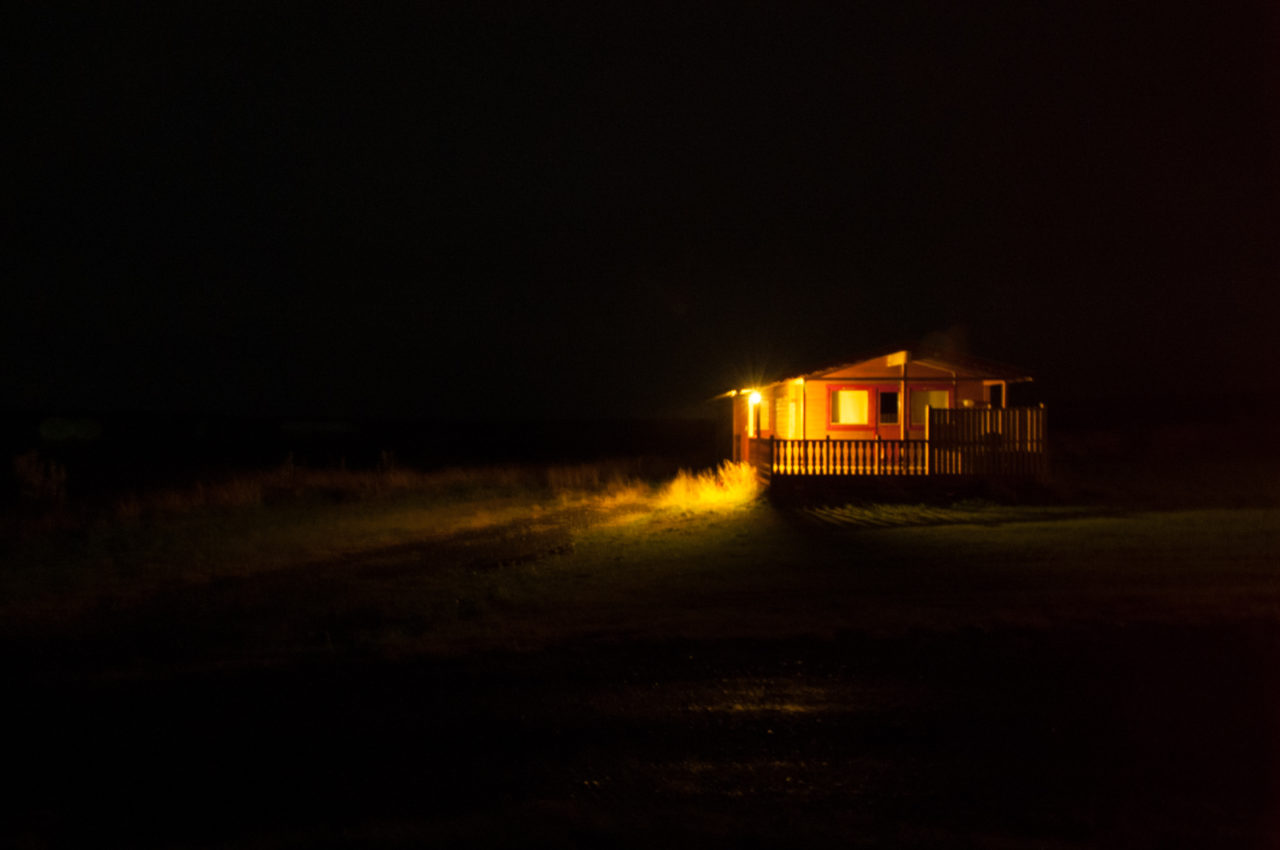
Many Icelanders also offer farm-stay tourism. On their farms they put up wooden cabins or rent out part of their home. I stayed in one such wooden cabin and warmly recommend it to everyone. There was even a jacuzzi on the terrace. On a cold autumn night, gazing at the aurora, you can warm yourself in the hot water.
View related articles
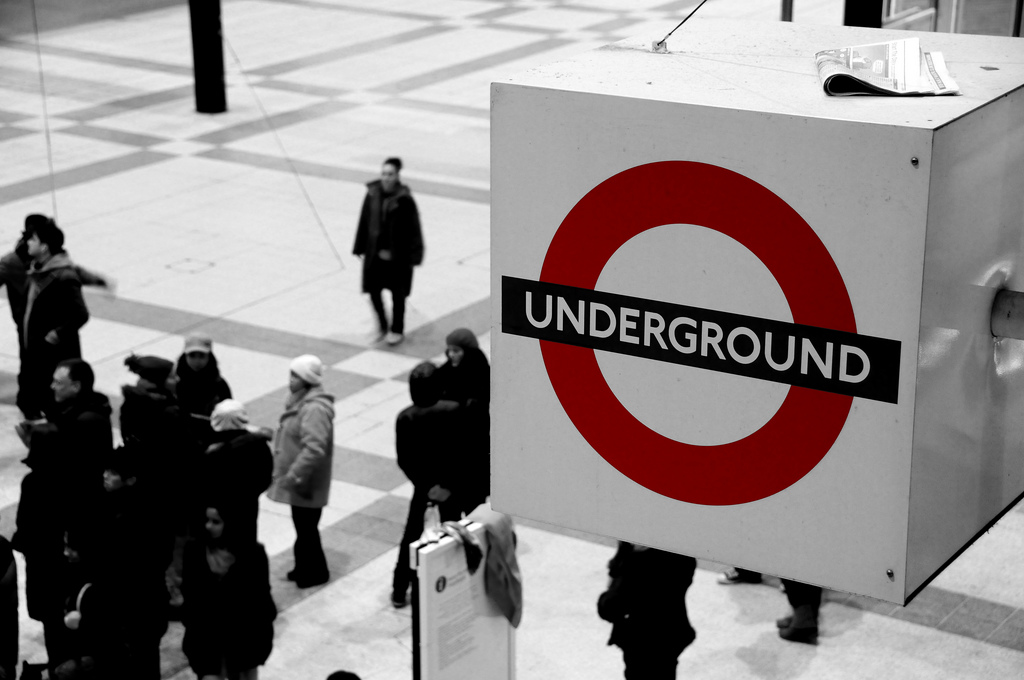
Lundon! There's Lądek, Lądek Zdrój, yes…
One day, sitting quietly at my computer, I met Kaja. A strange chain of events led me to decide to visit her in Seville, Spain. I planned my trip so as to see London along the way — the city that has become a paradise of riches for Poles.
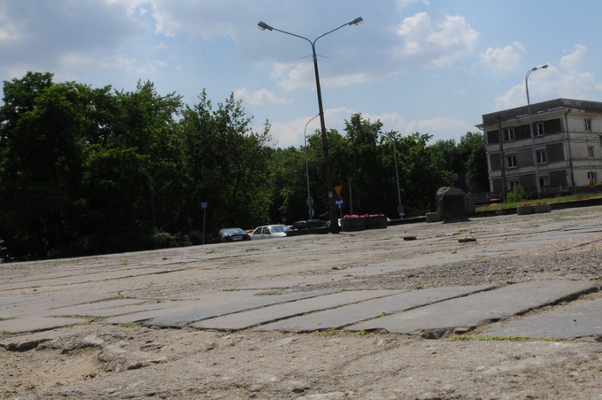
The Old Market Square in Łódź
As tends to happen at the end of the year, a little grumbling is in order. That Łódź is a different city from all the rest, I probably no longer need to prove to anyone. Sitting in front of my computer, I realised yet another fact that sets this place apart. We have no Old Market Square!
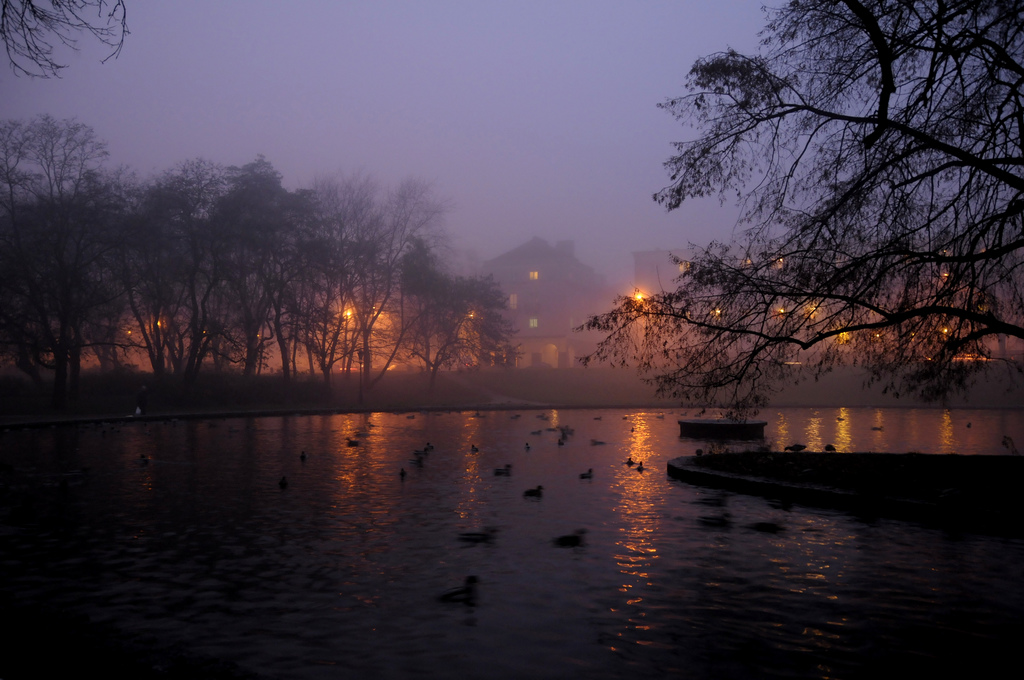
Foggy Wanderings Around Łódź
Some time ago I went on night-time wanderings around Łódź. The city seemed to me empty, sad and gloomy then. On a certain foggy evening I wanted to set out again and capture the beauty that Łódź hides somewhere within itself.