It doesn't concern me. They've got nothing to steal from me.

When you change jobs or start a job, you have to go through health and safety training. Let's be honest. A reasonably with-it person knows that you should run away from a fire and call the fire brigade. When you take a driving course, they teach you to fasten your seatbelt. But when you set up an email account or buy something in an online shop, no one teaches you how to do it safely. Why!?
Table of contents
The crimes of the future
We live in a digital world. The pandemic showed that we can do many things completely online. Enterprises, non-governmental organisations, the public sector and our private affairs are more willingly moving into the world of the internet. We live online.
Just as in the real world there are thieves, criminals, rapists, so they also exist in the world of the internet. The one thing that differs is the fact that there are more of the latter, they can do more, they steal more and they're more elusive.
Cybercriminals, cyberterrorists who, using modern technologies, mercilessly attack companies, organisations, whole governments, the military and private individuals. That's why don't say it doesn't concern you.
How often does a cyberattack happen?
Research carried out at the Clark School of the University of Maryland shows that a cyberattack happens on average about every 30 seconds, and according to an Accenture report, 43% of attacks are directed at small and medium enterprises and private individuals. Yes! Almost every minute, someone like you becomes a victim!
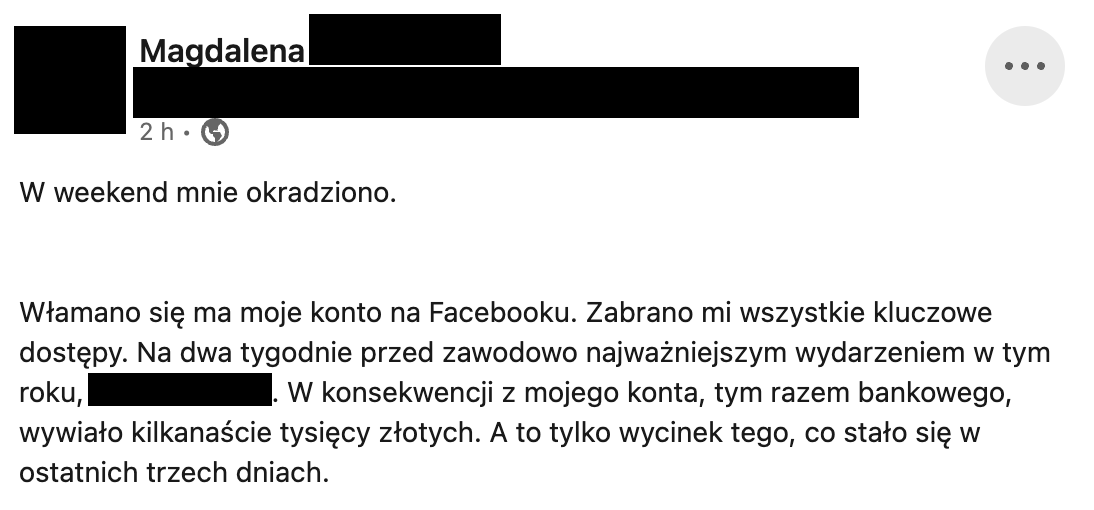
You probably still think that nothing has happened to you. When someone robs your home, steals your laptop or phone - you find out almost immediately. You simply see.... or don't see the car in the car park or the phone in your pocket. With a cyberattack it's different. IBM carried out research which shows that identifying an incident of this kind takes on average 206 days, and removing its effects – 73 days.
Perhaps you've already been robbed, but you don't know it yet.
So what can they steal from me since I have nothing?
Are you sure you have nothing? You don't have to run an IT company, be an entrepreneur or have access to accounting data to possess something for a cybercriminal. What might interest them is:
- email - access to it will very often enable access to other resources (social media accounts, banks, shops where you leave your credit card). The content of the mail itself is sometimes interesting too. Ordinary people keep everything there - from a scan of an ID card sent a few years ago to a notary before buying a flat, to a list of passwords, or intimate photos sent to a partner. Think about the consequences of losing access to this data, or a ransom demand not to reveal it.
- identity - a cybercriminal can simply be you. They'll take over all your social media accounts, your mail or even impersonate your phone number. The aim will be to persuade friends, e.g., to help you and defraud them of 50 zł. Across many friends, that's a nice earning. Or maybe a loan in your name? Or buying illegal things and making you the victim?
These are two of the more important pieces of data you have. And there's more of it, and you don't realise it.
I'm most afraid of my private conversations and party photos being revealed!
Running many cybersecurity-related training courses, participants very much repeat one thing they fear in such leaks: that someone will learn their private conversations (often intimate), private photos and other similar materials.
They worry least about the leak of customer data, losses for the company they work for, or the financial consequences.
So how do you deal with this?
Until now, cybersecurity was always the domain of IT. The development of artificial intelligence and its use on a mass scale, however, is becoming a topic of everyday life. The propaganda surrounding us, supported by fake news, or the attempt to defraud money using phishing attacks supported by AI, isn't the "hackers" known from films fighting evil corporations, but criminals who have moved up to a higher level.
"The five most efficient cyber defenders are: Anticipation, Education, Detection, Reaction and Resilience. Do remember: 'Cybersecurity is much more than an IT topic.'"
– Stephane Nappo
One of the most important methods of defence against cyberattacks is education. It's the human being who is the weakest link in this whole puzzle. You can have strong passwords, with two-factor authentication support and correct backup policies, and in a moment of stress and a flood of work, you'll click a bad link and install infected software.
If you need training on this topic for yourself, your family or your company, let's arrange a 15-minute, free consultation.
What else can I do?
If you suspect some fraud online, someone wants to defraud you of data, or you've been robbed, you can report it to CERT Poland. A special computer incident response team will block such an attack. All you have to do is go to the website incydent.cert.pl and fill in a simple form. It really works!
View related articles

IT outages happen to everyone
For the past few hours the internet messenger Slack has been down. A few weeks ago you couldn't use Google's services, and even earlier a large part of the Internet wasn't working because of an outage of Cloudflare's services. Is it possible that cloud services are unavailable?
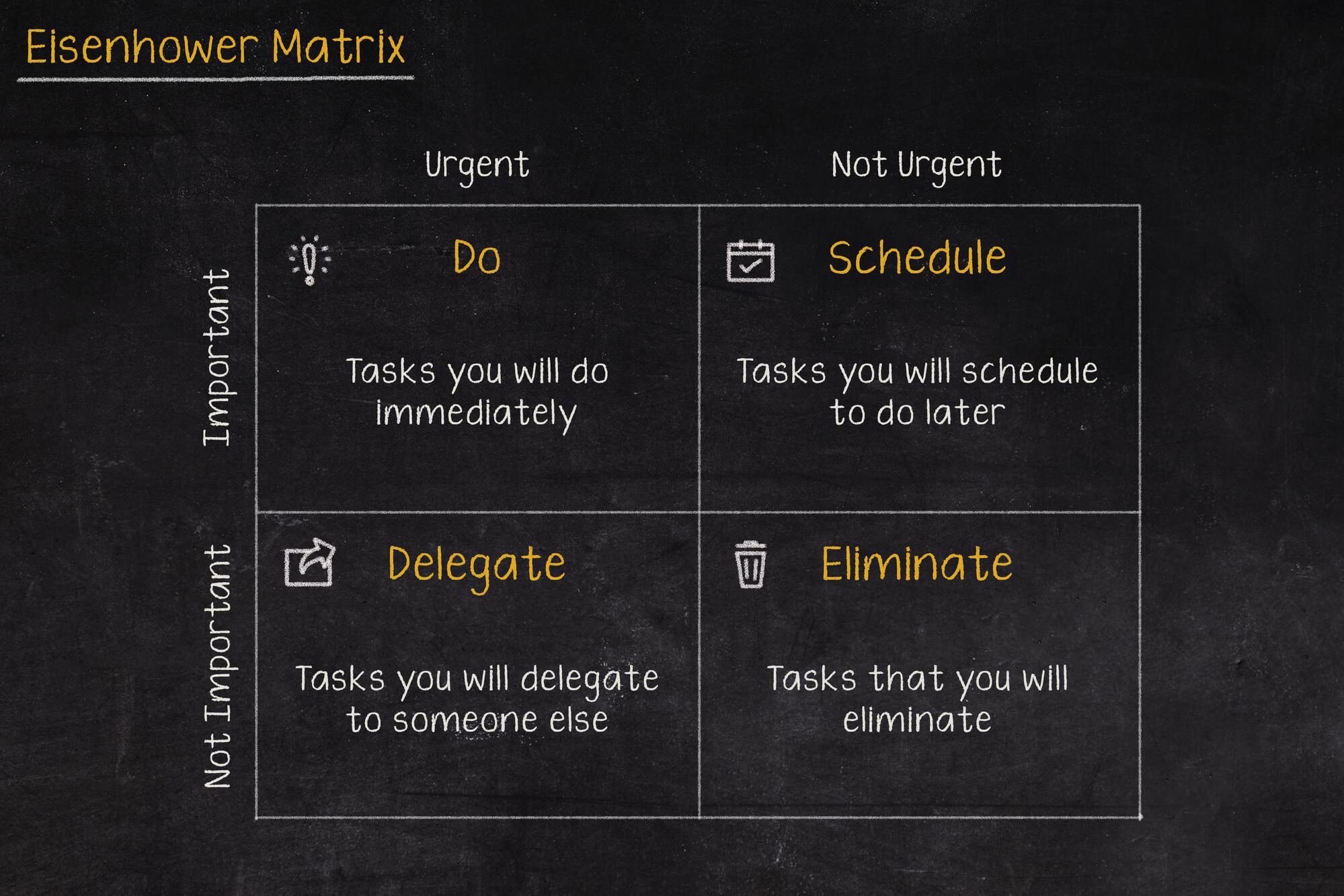
The Eisenhower Matrix, or how to take control of priorities
Go on a break, or maybe reply to that email, or pick up the phone from your boss? In what order should you tackle these tasks so as not to lose control and fall into helplessness? The solution to these problems may be the Eisenhower Matrix (also called the Eisenhower Box or Eisenhower Square).

Should the RCB Alert inform about the presidential elections?
Communication in an emergency is one of the more important topics covered during sailing, flying or diving. Warnings can save lives, which is why they shouldn't be treated lightly, and even more so shouldn't, by their wording, lead to their being ignored.